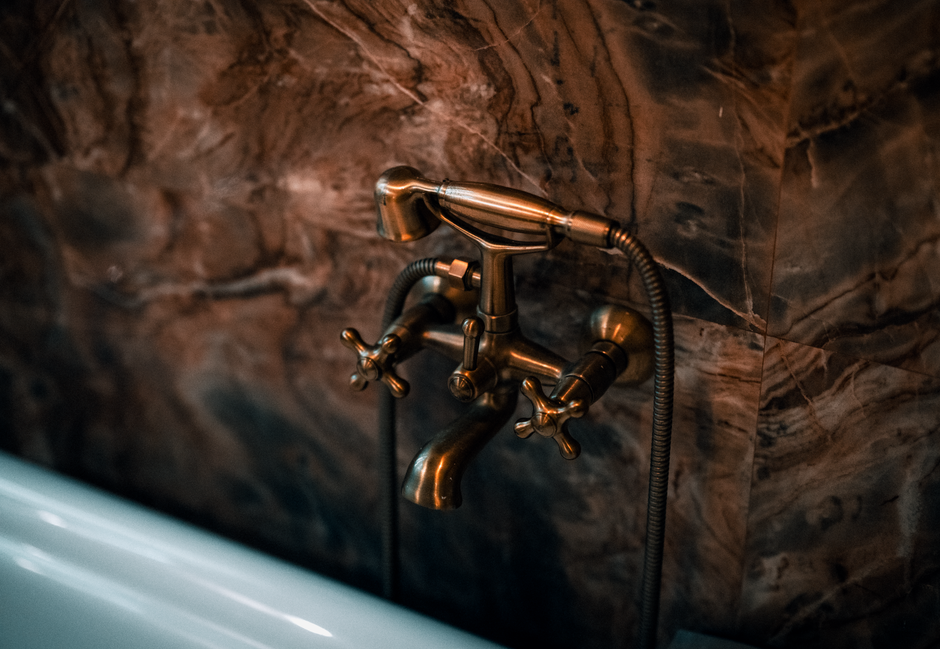
Gold Bath Spout Buyer's Guide: Choose & Compare UK Prices
What You Need to Know Before Buying a Gold Bath Spout
A gold bath spout is one of the most visible fixtures in your bathroom, yet most buyers treat it as an afterthought, grabbing the first shiny option that fits the budget. The result is predictable: a spout that drips within two years, a tone that fights with the taps, or a reach that sprays water over the rim instead of into the tub. Choosing well takes about fifteen minutes once you know which specs actually decide whether a spout lasts a decade or a season.
Across the UK market, gold bath spouts run from roughly £30 to over £460, but most homes are best served between about £45 and £85. That band is where ceramic cartridges, properly sealed plating and sensible warranties start appearing. Drop below about £45 and you are usually buying thinner plating over ordinary brass with a rubber washer inside, which is fine in soft water and a false economy almost everywhere else. The live widget on this page tracks over 1,450 gold bath spouts across UK retailers, refreshed daily, so stock and pricing shift constantly. This guide gives you the decision framework that holds regardless of what is listed today.
Quick answer: Buy a mid-range wall-mounted gold bath spout (about £45–£85) with a ceramic disc cartridge, a PVD or electroplated finish over named brass, and a reach that matches your bath, typically 120–140mm. If your water is hard, prioritise ceramic internals over any cosmetic upgrade. If you are renovating, confirm your pipe thread size before you fall in love with a finish.
Why be this deliberate? Because a leaking spout is not a cosmetic problem. Water tracking back along a wall-mounted spout can rot plasterboard and stain tiles, and a plumber call-out plus making good easily runs past £200. A mismatched finish is cheaper to fix but more annoying, because you stare at it every day. Three decisions move the needle: the base metal and how the gold is sealed onto it, the cartridge inside, and how the spout mounts and reaches into the bath. Get those right and you have a fixture that looks right and behaves for ten years or more.
This guide assumes you are replacing a bath spout or specifying one for new pipework. If you are buying a complete bath mixer, where the tap and spout are one unit, many principles still apply but the control mechanism changes the calculus. Two counter-intuitive truths catch most buyers out, and both are covered below: one about plating thickness, and one about water pressure that nobody discovers until the first turn of the tap.
The Decisions That Matter Most
Choosing a gold bath spout is not an aesthetics exercise. It is a matching exercise between three things: your water, your existing pipework, and how the bath is actually used. A spout that suits a soft-water new build in Manchester is the wrong buy for a hard-water Victorian terrace in Kent.
Material and Plating: Why Thicker Is Not Automatically Better
Almost every gold bath spout sold in the UK is brass with gold plating on top. Solid gold would cost thousands and scratch if you looked at it wrong, so plating is the standard and that is fine. The confusion starts with the assumption that thicker plating equals longer life. Counter-intuitive truth one: plating thickness matters far less than the quality of the base brass and the sealing process. Five microns of well-sealed gold over high-grade brass will outlast twenty microns of poorly adhered coating over cheap brass, because the failure mode is almost always blistering or flaking at the edges, not wear through the middle.
Look for finishes described as PVD (physical vapour deposition) or electroplated, and for a named base metal grade rather than the word brass on its own. A maker who specifies the alloy is telling you they control the substrate, which is where durability is won. Chrome is cheaper and shrugs off hard water better than most finishes, but it will not match gold taps. If your existing fittings are gold, stay gold for visual consistency even at a small premium.
Cartridge Type: The Hidden Engine
Inside every spout sits a cartridge controlling flow and shutting off the drip. There are two families. Ceramic disc cartridges slide two polished discs against each other, resist limescale, rarely seize and can last fifteen years or more. Rubber washer cartridges are cheaper to make but the washers harden and degrade, needing replacement every three to five years in hard water. Most spouts above about £50 use ceramic.
Counter-intuitive truth two: a budget spout with a ceramic cartridge will outlast a mid-range spout with a washer cartridge, even if the mid-range one looks far fancier. The cartridge type is buried in the small print, but it is the single best predictor of reliability you will find. If a listing will not tell you, assume washer and move on.

Reach, Mount Type and Pipework Compatibility
Reach is how far the spout extends from the wall into the bath, usually 100–150mm. Too short and water splashes outside the tub; too long and it fouls the rim or your head when you lean in. Most baths want 120–140mm. Measure from the wall to the point where you want water to land, not to the bath edge.
- Wall-mounted: the most common arrangement, screwed to the wall with pipes behind the plaster. Best look, but you need access if anything goes wrong.
- Deck-mounted: sits on the bath rim or a deck, easier to fit when you do not want to open a wall, less common in gold.
- Pipe thread: 15mm is standard in UK homes, but older properties sometimes use 20mm or BSP threads. Confirm before ordering, because an adapter adds cost and a return adds hassle.
Finish Consistency and Visual Matching
Gold is not one colour. Warm champagne, bright yellow, brushed and matte tones all read differently under bathroom lighting, and online photography flatters all of them. If you are replacing a single spout alongside existing gold taps, buy from the same range where possible or view the finish in person. A tone that looks identical on a screen can look obviously wrong once it is 300mm from your tap.
Materials, Types and Sizing: Reading the Spec Sheet
Gold Bath Taps


Browsing the live widget throws dozens of specs at you. Here is what earns its place and what you can ignore.
Base Materials
Brass is the default base for gold spouts: corrosion-resistant, easy to plate, warm to the touch. High-grade free-cutting brass machines cleanly and plates evenly, while lower grades cause uneven coverage and early wear. Chrome sometimes appears as an intermediate layer between brass and gold, which is a positive, because it improves adhesion. Stainless steel turns up occasionally in premium ranges; it is extremely durable but harder to plate, so it commands a higher price.
Plating Thickness and Finish Type
Plating is measured in microns. Mid-range spouts typically use 5–10 microns, premium ones 15–20. Quality of sealing still trumps the number, but the figure is a useful sanity check. Finish choice is practical as well as visual:

- Polished: shows fingerprints and water spots, needs regular wiping, suits soft-water areas.
- Brushed or matte: hides marks and spotting, more forgiving in hard water, reads more contemporary.
- Satin: the middle ground, good with mixed metals.
Flow Rate and Pressure Ratings
Spouts are rated for minimum and maximum pressure, usually 0.5–5 bar. Most UK homes run 2–3 bar so this rarely bites, but if you have a low-pressure gravity system or a combi boiler with modest output, check the minimum rating. This is the spec almost nobody reads, and it is why some buyers fit a beautiful spout and get a trickle.
Cartridge and Fit Specs Worth Checking
- Cartridge lifespan: often quoted in millions of cycles; higher is better.
- Limescale rating: ceramic is inherently better; some listings state hard-water suitability explicitly.
- Installation depth: how far the cartridge sits inside the wall, relevant with shallow walls or thick tile.
- Weight: spouts over about 1kg may need extra wall support in dry-lined walls.
Budget Bands: What Each Tier Actually Gets You
The market spans roughly £30 to £460, but three bands account for almost every sensible purchase. Here is the honest comparison.
| Band | What you get | Best for |
|---|---|---|
| Budget, up to about £45 | Washer cartridges common, thinner plating over standard brass, basic polished finish, wall-mounted only, short warranties | Rentals, soft-water areas, temporary replacements |
| Mid-range, about £45–£85 | Ceramic disc cartridges, PVD or electroplated finishes, better brass and tolerances, brushed and satin options, warranties around five years | Most homeowners, hard-water areas, anyone staying put for five years or more |
| Premium, above about £85 | Aerated or pressure-balancing cartridges, thickest plating, designer finishes, lifetime or extended warranties, replaceable aerators | Showpiece renovations, very hard water, buyers who want fifteen years without thinking about it |
At the budget end you are buying function, not longevity, and that is a legitimate choice for a rental or a stopgap. The trap is paying mid-range money for budget internals because the finish looked good in a photo. In the mid-range band, insist on a ceramic disc cartridge, a named plating process and a warranty of at least five years; those three filters alone eliminate most of the disappointments. Above about £85 you are paying for engineering refinement and finish exclusivity, which is worth it when the bathroom is a feature of the house and the spout sits beside high-end taps, and less worth it in a small second bathroom nobody photographs.
Use the live widget like a filter stack rather than a shopping list. Set your band, filter for ceramic cartridges, choose brushed or satin if your water is hard, check reach against your measurement, then read reviews specifically for mentions of longevity and limescale. Compare warranties last, because a long warranty from a maker who specifies their brass is worth more than a longer one from a listing that will not name the cartridge.
Common Mistakes and Questions
- Buying on price alone: a cheaper spout with a ceramic cartridge beats a pricier one with a washer every time.
- Ignoring water hardness: in hard-water areas a washer cartridge is a three-year replacement cycle you signed up for.
- Skipping the reach measurement: a 100mm spout in a bath that needs 140mm will soak the floor.
- Assuming gold means solid gold: it is plated brass, and the plating process is what you are really buying.
- Not checking the thread: 15mm is standard, but confirm before ordering or budget for an adapter.
- Choosing polished in hard water: it looks superb for a fortnight, then shows every spot.
Will a gold spout match my existing gold taps? Usually, but not guaranteed. Gold varies in warmth, so buy from the same range or view the finish in person where you can.
How long should one last? A mid-range ceramic spout runs ten to fifteen years with normal use. Budget washer spouts manage three to five in hard water, five to eight in soft. Premium units can pass twenty with basic care.
Can I fit it myself? If your pipework is accessible and standard 15mm, yes, it is a straightforward swap. Adapting from 20mm or working behind sealed tiles is a job for a plumber, and labour typically runs £80–£150.
Spout or mixer? A spout is the outlet only; a mixer includes the controls. If you are replacing the whole tap assembly, the cartridge and valve questions change, so treat this as a spout-only guide.
Spend your money on the internals and the seal, measure twice, and a gold bath spout becomes the fixture you never think about again, which is exactly what you want from plumbing. The widget above shows what is genuinely available today; the framework here will still be right when the listings have turned over.