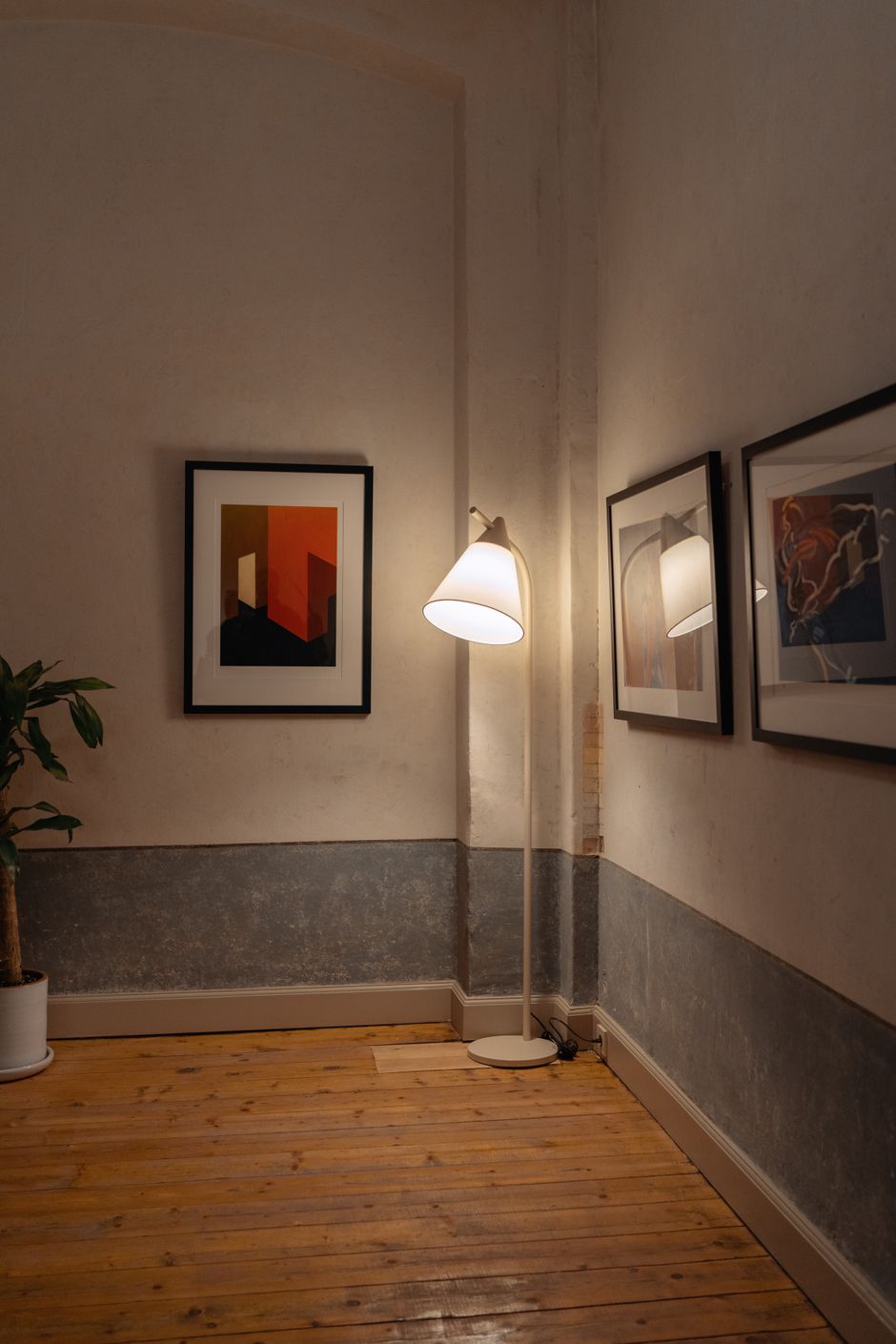
Wooden Floor Lamps Buying Guide UK 2026
Quick answer: Choose on three things — the reach and coverage the lamp gives your room (not just its height), whether it takes a standard dimmable bulb, and a wood finish and base that suit your flooring. Budget lamps up to about £40 work for spare rooms and task light; mid-range (£40–£65) buys better joinery, thicker shades and dimming; premium (above £65) buys solid hardwood, refined finishing and a lamp that will outlast two cheap ones. Most UK buyers land in the mid-range.
Why does the band matter so much? Because a floor lamp is semi-permanent furniture. You'll live with it for three to five years at least, and it will sit in the same spot through redecorations, house moves and the arrival of a toddler or a puppy. A lamp that's 15 cm too short never quite lights the reading chair. A shade that's glued on can't be refreshed when it yellows. A base that's too narrow for a deep-pile carpet wobbles every time someone brushes past it. None of these are visible in a showroom photo, and all of them are avoidable if you know what to check.
We'll start with the counter-intuitive decisions — the ones competitors skip — then break down materials, sizing and the specs worth reading, compare what each budget band actually delivers, and finish with the mistakes that catch most buyers. Our live widget shows current stock and prices from our curated range; use this guide to know what to look for, and the widget to see what's available today.
The Decisions That Matter Most
Most buyers fixate on the wrong details. They see "solid wood" and "linen shade" in a description and assume quality is guaranteed. It isn't. Here's what actually determines whether a wooden floor lamp earns its place.
Reach beats height
This is the fact that surprises people most. A taller lamp is not automatically a better lamp. What matters is how far the light reaches from the base — the spread of the shade or the sweep of an arc arm. A 150 cm straight pole with a narrow shade throws a tight pool directly beneath it, useless for lighting a sofa two metres away. A 130 cm lamp with an arc arm or a wide drum shade can wash an entire seating area. Measure the distance from where you sit to where you want the light to land, then check the lamp's reach, not its total height. In a typical UK lounge with a sofa against one wall, an arc or angled-arm design will out-perform a taller straight lamp every time.
Bulb fitting and dimming
Here's the second counter-intuitive point: the cheapest lamps often cost more to run properly. Budget models up to around £40 frequently ship with a non-dimmable bulb, or no bulb at all, and occasionally a fitting that only accepts a specific type. A mid-range lamp usually comes dimmable-ready and often includes the bulb. That difference is worth £15–£25 once you've bought a compatible dimmable bulb and possibly a dimmer switch. In a bedroom, a non-dimmable lamp is genuinely unpleasant at night — harsh and clinical. Check three things before buying: does it take a standard E27 screw bulb, is the fitting dimmable-compatible, and is a bulb included.

Base stability on soft flooring
A lamp can feel rock-solid on a showroom's hard floor and turn into a hazard on your thick wool carpet. Tripod designs with splayed legs distribute weight far better than a single narrow pole. If your room has deep pile, prioritise a wide, weighted base or a tripod over a slim pedestal. This matters most in homes with children, pets or a busy hallway. A mid-priced lamp that stays put is worth more than a cheaper one that topples.
Wood finish and joinery
Budget lamps tend to be stained softwood with glued joints; mid-range and premium use solid hardwood, dowelled or mortise-and-tenon joints, and sealed finishes. Run your hand over the wood — smooth or rough? Look for gaps at the joints. A sealed matte or satin finish resists marks and dust far better than a glossy stain, which shows every fingerprint. In a hallway where coats and bags brush past, that finish choice is the difference between a lamp that still looks smart after two years and one that looks scuffed.
Shade material and replaceability
Wooden Floor Lamps


Linen and rattan age differently. Linen diffuses light beautifully but yellows with heat and UV; rattan resists staining but can turn brittle in strong sun. The detail almost nobody checks: is the shade clipped or glued? A replaceable shade lets you refresh the lamp in a few years without replacing the base. A glued shade means the whole lamp is disposable once the fabric tires. On a mid-range or premium lamp, confirm this before you commit.
Materials, Types and Sizing: Reading Specs Like a Buyer
Once you know what matters, the spec sheet becomes readable. Here's how to interpret the wood, the shade and the measurements.
Wood types
- Softwood (pine, fir): Cheaper and lighter, but dents and scratches easily. Common in budget lamps; accepts stain well but shows wear fast.
- Hardwood (oak, walnut, ash): Denser and more durable, resists knocks, and develops character with age. The sensible choice for a lamp you'll keep.
- Veneered plywood: A quality wood layer over plywood. Looks like solid timber and costs less, but is vulnerable if the veneer lifts or cracks.
Shade materials
- Linen: Even, soft diffusion; ideal for living rooms. Ages visibly, so favour replaceable shades.
- Rattan and woven fibres: Creates dappled, characterful light; durable when thickly woven, but can date and brittle in direct sun.
- Fabric blends: Usually polyester-linen; more stain-resistant than pure linen, slightly less authentic in look.
The measurements that actually matter
- Total height: Most wooden floor lamps run 120–160 cm. Take your ceiling height, subtract 30 cm, and treat that as your safe maximum.
- Shade diameter: Wider shades (40 cm plus) cast more light; narrow ones (25–30 cm) create focused pools. Match to the area you're lighting.
- Base footprint: Under 30 cm suits small rooms; 40 cm-plus tripods are more stable but claim more floor.
- Reach (arc designs): A 60 cm-plus arm can light a sofa from the side without hanging over it.
- Weight: Under 3 kg is easy to move but less stable on carpet; 4–6 kg stays put.
- Bulb fitting: Standard E27 in the UK; confirm dimmable compatibility rather than assuming it.

A concrete example: in a small spare bedroom with a low ceiling, a 130 cm lamp with a 30 cm shade and a weighted base will light a bedside far better than a 160 cm statement piece that crowds the ceiling and throws light over your head. Fit the room first, then the style.
Budget Bands: What You Get at Each Level
The price bands are the quickest way to set expectations. These are category aggregates across the wooden floor lamp market, not any single product's price, so they hold true as individual listings change.
| Band | What you typically get | Best for |
|---|---|---|
| Budget — up to about £40 | Softwood or veneered base, simple pole or basic tripod, thin linen or polyester shade, often non-dimmable or bulb not included | Spare rooms, home offices, renters, temporary setups |
| Mid-range — about £40–£65 | Solid hardwood or quality veneer, proper joinery, thicker linen or rattan shade, dimmable-ready fitting, more design variety, better base stability | Living rooms and main bedrooms seen daily; buyers wanting durability without premium pricing |
| Premium — above £65 | Solid named hardwood, refined hand-finished joinery, designer shades, full dimming support, exceptional stability and 5-plus-year longevity | Showpiece lamps in high-traffic rooms; long-term fixtures in design-led homes |
At the budget end, watch for glued joints that separate, thin shades that yellow within a couple of years, narrow bases on soft flooring, and bulb compatibility surprises. In the mid-range, the value is in the joinery and the dimmable fitting — verify the shade is replaceable and check base width if your flooring is soft. Above £65, you're paying for hardwood species, finishing and longevity; the lamp should feel noticeably more solid in the hand, and the shade should be thick enough to hold its shape for years.
To narrow the live widget quickly: filter by height (aim 120–150 cm for most UK homes), base type (tripod for carpet, pole for hard floors), shade material (linen for classic, rattan for trend, blend for durability), dimming (always take it if your budget allows), a matte or satin finish over glossy, and a bulb included where possible.
Common Mistakes and FAQs
Five mistakes to avoid
- Buying height without checking reach: a tall lamp with a narrow shade won't light a sofa two metres away.
- Ignoring base stability on carpet: a showroom-solid lamp can wobble on deep pile; check base width and weight.
- Assuming all wooden lamps are durable: glued joints and thin veneers age badly; look for proper joinery.
- Skipping bulb compatibility: a non-standard fitting can add £15–£25 to your effective cost.
- Choosing shade material on looks alone: linen yellows, rattan can brittle — pick for your room's light and your tolerance for replacing it.
Frequently asked questions
Can I use a wooden floor lamp in a bedroom? Yes, and it's often the best choice — wood and fabric give softer, warmer light than a ceiling fixture. Choose a dimmable model so you can drop the light at night, and avoid narrow bases on thick carpet.
How do I clean one without damaging the finish? Use a soft, dry microfibre cloth; dampen it only lightly for stubborn dust. Skip harsh cleaners and furniture polish, which streak. For linen shades, use a lint roller or soft brush — never wash them, as they shrink.
Is rattan more durable than linen? Rattan resists yellowing and staining better, but can become brittle in direct sun over three to five years. Linen ages more gracefully but yellows faster. Choose by your room's light exposure.
What's the real difference between dimmable and non-dimmable? A dimmable lamp lets you adjust brightness with a compatible bulb or switch; a non-dimmable one is simply on or off. The dimmable version costs a little more but gives far more control over mood and energy use, especially in bedrooms and living rooms.
A wooden floor lamp rewards a little homework. Get the reach, the dimming and the base right, match the wood and shade to your room, and set your budget band honestly — most UK buyers find their answer in the mid-range, where quality, design and price align. Measure twice, check the widget for what's in stock, and you'll have a lamp you'll keep for years.