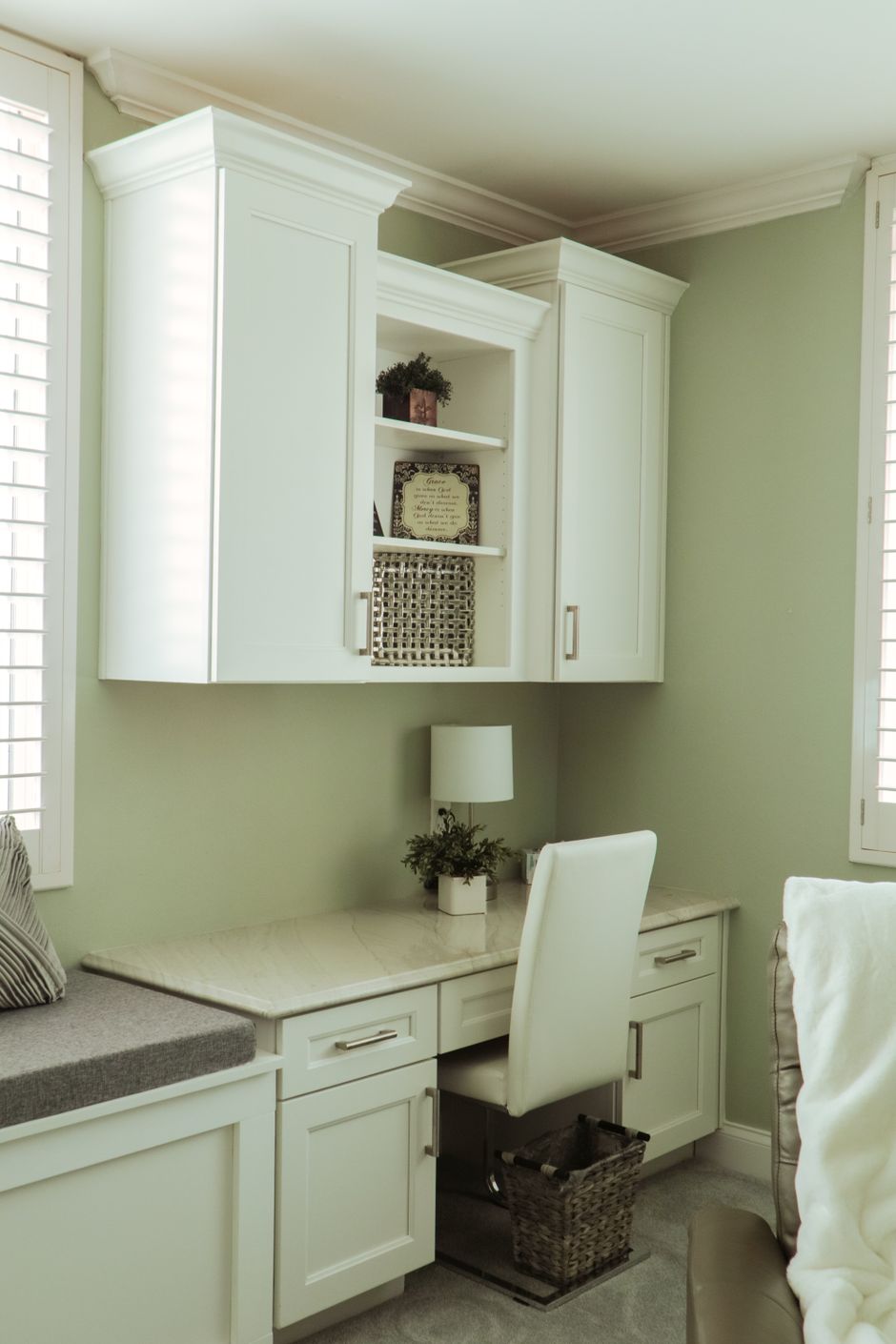
Storage Desks Buying Guide for UK Homes 2026
Here's the first thing most buyers get wrong: they buy too shallow. A desk described as having storage frequently means a narrow shelf above the work surface rather than a usable cupboard beneath it. Depth matters more than width. A 50cm-deep desk with a closed cupboard will hold more, and hold it more usefully, than a 70cm-wide desk with open shelving running along the back. Measure the depth of the room you're working with before you fall for a wide, handsome top.
The second non-obvious point concerns why cheap desks fail. It's rarely the surface material — particleboard with a decent veneer is perfectly serviceable. It's the hidden internal bracing, the cross-supports a manufacturer quietly deletes to hit a price. A budget desk with a large cupboard underneath will sag and creak within six months if the frame was economised on, and no product photo will show you that. It's the single strongest argument for the mid-range band, where bracing tends to survive the cost-cutting.
One more reality check before you browse: a storage desk is heavier than a basic desk, and heavier furniture punishes bad assembly. Budget instructions are often vague, fixings are sometimes short, and doing it solo on a Sunday evening is how wobbles begin. Budget an hour and a second pair of hands. Our live picks on this page show current stock and prices; the guidance here is designed to stay true long after any individual listing has sold out, so use it to read the specs rather than to chase a particular model.
The Decisions That Matter Most
Choosing a storage desk isn't like choosing a chair, where comfort settles most of the argument. Here you're balancing five competing priorities, and getting the hierarchy wrong is how money gets wasted.
Work surface versus storage footprint
The top is where the monitor, keyboard and papers live; the storage sits underneath or beside it. These two needs fight for the same cubic space. A 120cm desk with a deep cupboard leaves less usable surface than a 140cm desk with shallow shelving, and buyers who assume bigger is better often find they've nowhere to put a mug because the storage has eaten half the depth. Work out your actual requirement first — dual monitors demand width and a stable span, a laptop needs very little — then choose storage that doesn't steal from the surface. In a typical spare-bedroom office, a 100–120cm desk with a closed cupboard at one end beats a 140cm desk with open shelves across the full back.
Open versus closed storage

Open shelving looks modern and accessible in showroom photography. Closed cupboards look calmer and hide mess. What the glossy guides skip: open shelving demands constant tidying, and if you're buying a storage desk precisely because you have too much clutter, open shelves will nag at you every working day. Closed storage is psychologically easier — shut the door, forget it — and it also shields documents and electronics from dust, which matters in older UK homes with sash windows and busy roads outside. That's a practical benefit, not merely an aesthetic one.
Material and weight capacity
Most budget desks use particleboard or MDF under a veneer, which is fine for files, books and a small printer. The number that separates a five-year desk from an eighteen-month sag is the stated weight limit per shelf. A budget model might quote 20kg; a mid-range one might handle 40kg. If you plan to store a scanner, a stack of lever-arch files or a heavy monitor, that figure is the one to hunt for in the listing. Solid wood and plywood are heavier and more stable but cost more; a metal frame adds rigidity with little weight penalty. Internal bracing remains the invisible variable, which is why mid-range options so often outlast cheaper wooden ones in real homes.
Cable management
A storage desk can hide wiring, but only if it was designed to. Budget models frequently have no grommet holes or routing channels, so you end up with a curtain of cables down the back — messier than the clutter you set out to banish, and a nuisance when you need to move the desk to decorate. Mid-range and premium desks include grommets, clips or internal channels. Treat this as functional, not luxurious.
Storage Desks


Assembly and stability
Heavier furniture needs better assembly, and storage desks are heavier by definition. Poorly built ones creak, rock and eventually fail at the joints. Budget kits sometimes arrive short of fixings or with instructions that assume prior knowledge; mid-range kits tend to have pre-drilled holes and clearer diagrams; premium pieces often offer assembly or modular designs that go together properly first time. The overarching decision is to prioritise stability and material quality over sheer size. A smaller, well-built storage desk will serve you far better than a large, flimsy one — and in a small flat, it'll fit the room too.
Materials, Types and Sizing Explained

Spec sheets for storage desks are written to reassure rather than inform, so here's how to decode them.
What the materials actually mean
- Particleboard and MDF — the budget standard, compressed wood fibre under a veneer. Fine for light loads; the veneer quality decides whether it chips in a year or lasts a decade, and photos won't tell you, so read reviews for mentions of peeling edges.
- Plywood — thicker and more durable, common in mid-range and premium desks, and noticeably better at holding screws under repeated load.
- Solid wood — the premium choice: heavy, long-lasting, harder to move and to modify later.
- Metal frames — steel or aluminium adds stability cheaply. A metal frame with a particleboard top often feels more solid than an all-wood budget desk, which is why some mid-range pieces outperform cheaper timber ones.
Types and where they fit
- Computer desks — built around monitors and cables, usually with a narrow shelf above and a cupboard or drawer bank below. Good for a dedicated study.
- Corner desks with storage — use two walls to maximise a small room, with storage to one side. Awkward to move, excellent in a box bedroom.
- Gaming desks — wider, typically 120–140cm, with cable routing as standard. Overkill unless you genuinely run multiple screens.
- Shaped desks — L- or U-shaped configurations that combine a work surface with a return or separate storage. Premium, expensive, superb for complex workflows.
- Office storage desks — the most versatile shape, usually 100–120cm with a closed cupboard plus open shelves. Suits most home setups.
The numbers that matter
- Width — 100–120cm is the sweet spot; under 90cm is cramped for two monitors, and beyond 140cm you're surrendering floor space for little gain.
- Depth — 50–60cm is the minimum for a real cupboard underneath; 60–70cm is ideal; past 75cm you're eating the room.
- Height — 72–76cm suits seated work. If you're tall, check adjustability or plan for a footrest.
- Storage capacity — a 100-litre cupboard holds roughly what a small filing cabinet does; a 40cm-wide, 20cm-deep shelf takes about 15–20 folders.
- Weight limit — check per shelf and overall. 40kg per shelf is good, 20kg is tight, and total capacity should exceed your expected load by at least 50kg.
Budget Bands: What You Get at Each Level
Price reflects design and durability as much as material, so the bands are a useful shorthand for what the storage will actually do.
| Band | What you get | Best for | Watch out for |
|---|---|---|---|
| Budget — up to about £55 | Particleboard with veneer, small cupboard or drawer bank, minimal cable management, shallow storage | Students, renters, light laptop use, testing whether you need storage at all | Fiddly assembly, minimal bracing, wobble under load, open shelving showing clutter |
| Mid-range — about £55–£60 | Plywood or solid wood, better bracing, genuine storage depth, grommets or cable routing | Regular home workers and freelancers keeping the desk three years or more | Heavier and harder to move, more floor space needed, fewer colour choices |
| Premium — above about £60 | Superior materials, modular designs, integrated cable management, soft-close doors, sometimes assembly | Serious multi-monitor setups and anyone valuing durability and finish equally | Real cost premium for incremental gains; overkill for casual use |
At the budget end, filter for a particleboard or plywood frame rather than all-MDF, at least 40kg total capacity, 50cm depth or more, and closed storage for at least part of the unit. In the mid-range, insist on plywood or solid wood, 50–60kg capacity, internal cable routing, 55–65cm depth and a closed cupboard with adjustable shelves. Above £60, expect solid wood or high-grade plywood, 60kg-plus capacity, modular components and genuinely premium finishes — and ask yourself honestly whether your workflow justifies it. Our picks on this page span all three bands, currently rated between 4.7 and 4.8 stars, with live prices in the widget; use the filters to narrow by budget, type and size, and judge each against the specs above rather than the photography.
Common Mistakes and Questions
- Buying without measuring — a 140cm desk that's only 40cm deep wastes both money and floor space.
- Choosing open shelving for looks — you'll regret it the first week the clutter is on display.
- Ignoring weight limits — a 20kg shelf will bow under a monitor and printer within months.
- Skipping cable management — draped wires make a storage desk look worse than a bare one.
- Assembling alone — two people for half an hour beats one person for two hours of frustration.
- Not checking returns — if it wobbles or arrives damaged, you need a hassle-free route back.
- Assuming 'storage' means plenty — some units offer barely more than a plain desk, so read the shelf dimensions.
Is a storage desk worth it in a small flat? Almost always. It folds two pieces of furniture into one, and a corner design with storage to one side will beat an L-shaped desk in a tight room.
Can it double as a dining or craft table? Not comfortably. Desk height of 72–76cm is set for seated office work, not dining, and trying to serve both usually compromises each.
How long does assembly take? Budget kits run one to two hours and can be fiddly; mid-range about an hour to ninety minutes with clearer instructions; premium 30–60 minutes, sometimes with support. Add time if you're working alone.
Storage desk or desk plus filing cabinet? If space is tight, the integrated desk wins on efficiency and looks neater. If you need heavy-duty filing alongside a large surface, separate pieces can still make sense — but most home offices are better served by one well-chosen unit.
A good storage desk becomes invisible: it holds what you need, doesn't rock, keeps the surface clear and hides the mess behind a door. Judge every candidate against depth, bracing, weight limits and cable routing, and the right one will repay you in focus for years.