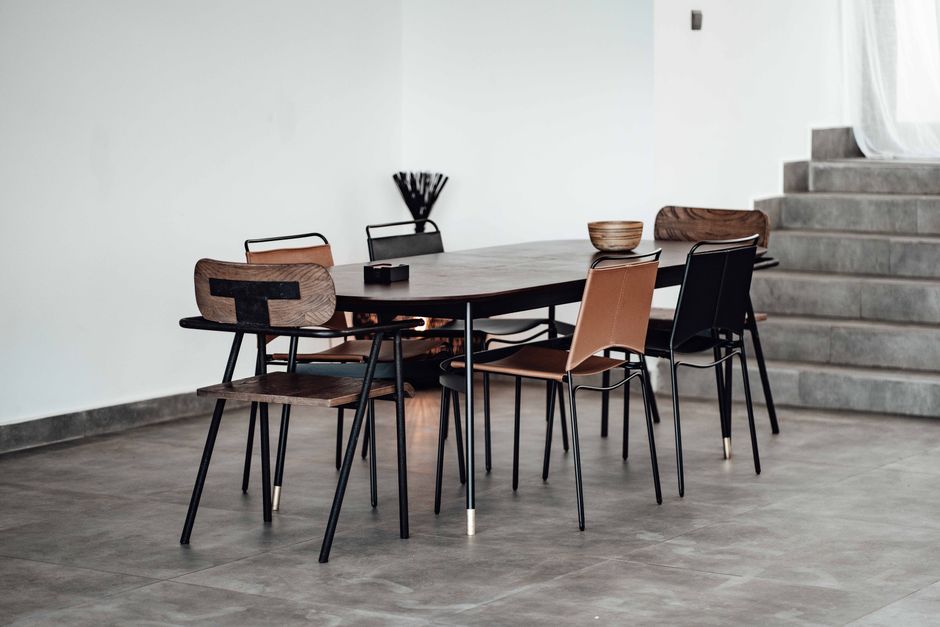
Modern Dining Tables Buying Guide UK 2026
The trap with this category is that the buying decision looks like a style decision. It is not. It is a fit decision, a finish decision and a legroom decision, in that order, and the colour comes last. A table that is beautiful and 10 cm too long for your walkway will be resented every single day; a plain one that lets four people sit without kicking each other will quietly do its job for a decade. Our picks on this page are filtered live so you can see what is actually in stock at each band, but the criteria below are what you should be judging them against.
One thing worth saying early, because it confuses a lot of buyers: the modern dining tables category overlaps heavily with console, side and sofa tables. Many pieces sold as dining tables are 1 m wide consoles, and many consoles are perfectly usable as two-person dining tables in a flat. If your space is tight, do not dismiss a console-shaped piece just because of the label — judge it on height, depth and legroom instead.
The Decisions That Actually Matter
Size: measure the walkway, not the table
The near-universal mistake is buying the largest table that physically fits the room. A table that leaves 60 cm of clearance to the wall or sofa creates a space you have to edge around, and in a UK Victorian terrace or a new-build flat, that 60 cm is exactly what you will end up with if you buy on length alone. Work backwards instead: allow at least 90 cm of clear walkway on every side you need to pass, and let the table take roughly 40–50% of the floor area. In a 3 m × 4 m room, that usually lands you at something around 1.2 m × 0.8 m, not the 1.8 m monster that looked modest in a showroom.
The counter-intuitive part: a smaller table with legs set in from the corners feels more spacious than a larger one with corner legs, because chairs tuck right up and nobody is straddling a leg. This is why a 1 m console-style table often works better in an open-plan living room than a 1.6 m dining table — it gives you the seating without eating the circulation space.
Material and finish: finish beats material every time
Wood, acrylic, rattan, metal, oak and pine all appear in this category, and buyers obsess over which is “best”. The more useful question is how the surface is finished. A mid-range oak table with a matte, sealed finish will hide fingerprints, water rings and light scratches far better than a glossy premium top, and it will still look presentable in five years. Gloss shows every mark; unsealed timber drinks red wine and olive oil. Read the spec for words like sealed, varnished or treated — if none appear, assume you are oiling it yourself.

Material then follows lifestyle. Sealed oak or a composite top suits a family with small children. Acrylic is light, visually open and easy to wipe, but it scratches and shows smears, so it belongs in low-traffic flats rather than a family kitchen. Rattan adds texture and is genuinely portable for renters, but it can splinter and dislikes damp. Powder-coated steel frames are sturdy; bare or poorly coated metal will mark and eventually rust in a steamy kitchen.
Leg configuration and legroom
Four corner legs limit comfortable seating to the long sides. Two central legs or a trestle base free up each end, adding roughly 15–20 cm of usable knee room per end seat on a 1.4 m table. If you regularly seat six or host at Christmas, that is the difference between a table that works and one where the end diner sits sideways. Central bases used to feel wobbly; modern engineering has largely solved that, so do not rule them out on stability grounds alone.
Storage and extensibility
Storage-integrated tables — drawers or a shelf underneath — add roughly 20–30% to the price but solve clutter in small homes where the table doubles as a desk or dumping ground. Extendable tables cost around 10–15% more and double your flexibility for guests. Neither is essential. Buy storage if clutter is your actual problem; buy extensibility if your household size or hosting habits might change. If neither applies, a fixed table is simpler, stiffer and cheaper.
Contemporary Dining Tables


Read the spec sheet like a fitter
Check length, width and height, and then check the leg-to-leg interior width, which is the number that determines comfort and is almost never in the headline. Standard dining height is 75–78 cm; if you are tall or pairing with high stools, confirm the clearance between the tabletop underside and your seat. A 1.4 m table with corner legs may give you only 1.2 m of usable legroom, while a trestle base of the same length gives closer to 1.35 m.
Materials, Types and Sizing in Plain English
Solid oak is hard-wearing, takes stain well and can be refinished; oak veneer over a plywood core is thinner and cheaper but perfectly serviceable if it is sealed properly, and it is what most mid-range tables use. Pine is softer, lighter and more affordable, and it dents rather than chips — fine for a spare room, less so for a family dining table. Walnut is rich and premium but wants care. When a listing says “oak”, check whether it means solid or veneer, because the difference shows up in year three, not week one.

Acrylic tops are the modern-looking option: lightweight, easy to clean, visually open, and best kept away from pets and children. Rattan and woven materials bring warmth and portability but splinter over time and cannot easily be sealed. Metal frames pair well with wood or acrylic tops; steel is sturdy but needs powder coating to resist rust, aluminium is light and rust-proof, and brass is decorative but wants polishing. In a UK kitchen with a boiling kettle and a tumble dryer, humidity is the enemy of anything unsealed.
On sizing, standard dining tables run 1.2–2 m long and seat four to eight; console tables run roughly 0.9–1.2 m and seat two to four against a wall or as a divider; side tables at 0.6–0.9 m are accent pieces. Width matters as much as length: 80–90 cm is standard for a proper dining table, while 60–70 cm is console territory and realistically limits you to one place setting per side. A concrete example: in a two-bed flat in Leeds with an open-plan living-dining area, a 1.1 m console against the wall with two chairs pulled out is a better daily solution than a 1.5 m table that blocks the route to the kitchen.
Budget Bands Compared
| Band | What you get | Best for | Watch out for |
|---|---|---|---|
| Budget: up to about £80 | Compact dimensions, lightweight materials such as acrylic, rattan or softwood, simple joinery | Renters, studios, small kitchens, light use by one or two people | Glossy finishes that show marks, thin tops, rare extendability |
| Mid-range: about £80–£110 | Better joinery, 1.2–1.6 m dimensions, oak veneer or metal frames, matte sealed finishes, some central legs or storage | Most UK households — families, professionals, anyone wanting five-plus years of daily use | Assuming “oak” means solid; check the finish wording |
| Premium: above about £110 | Solid hardwoods, bespoke sizing and finishes, advanced joinery, storage or extensibility, after-sales support | Permanent homes, high material standards, tables you intend to refinish rather than replace | Paying for gloss and brand rather than build |
The mid band is where most readers should start, and it is where the widest choice sits in our live widget. Filter by length first — under 1.2 m for small spaces, 1.2–1.6 m for standard rooms, over 1.6 m only if you have genuine open-plan space — then by material and leg style, then by whether you need storage. Compare your top two or three side by side and read the reviews specifically for durability complaints: acrylic scratching, veneer lifting at the edges, rattan splintering. Those recurring notes tell you more than any star rating.
Mistakes to Avoid and Questions We Get Asked
- Buying the biggest table that fits. You will spend every day edging past it; keep 90 cm of walkway.
- Ignoring the finish. A matte mid-range top outlasts a glossy premium one in appearance, whatever the price says.
- Choosing acrylic for a family home. It scratches and smears; it belongs in low-traffic flats.
- Overlooking leg placement. Corner legs waste end legroom; central or trestle bases buy you two extra comfortable seats.
- Skipping the interior legroom figure. A 1.4 m table can give you 1.2 m of usable knee room, and that is the number your guests feel.
- Assuming all wood is equal. Solid oak refinishes; veneer does not, though sealed veneer is a sound mid-range compromise.
- Forgetting maintenance. Unsealed timber needs oiling, rattan can splinter, gloss needs wiping — match the material to your patience.
Can a console table double as a dining table? Yes, for one or two regular diners who do not host often. A 0.9–1.2 m console seats two to four comfortably; beyond that, a full 1.2–1.6 m dining table is the better call for comfort and balance.
Is an extendable table worth the extra? If you host occasionally or your household might grow, yes — it costs around 10–15% more and doubles your flexibility. If your space and needs are fixed, a solid fixed table is simpler and stiffer.
What suits a family with young children? A sealed oak or composite top with a matte finish. Avoid acrylic, which scratches, and unsealed wood, which stains. Matte hides spills; gloss advertises them.
How do I check a table will fit before ordering? Measure the room, subtract 90 cm from each side you need to walk past, and compare what is left to the table's length and width. Then check the leg-to-leg interior width for seating comfort and confirm the height against your chairs.
The right modern dining table is the one that fits your walkway, survives your household and still looks decent in five years — not the one that photographs best. Use the bands above to set your budget honestly, use the criteria to shortlist, and let the live picks on this page show you what is currently available at each level. Sit at it in your mind before you buy, and you will not be returning it.