How to Choose Wooden Console Tables: UK Buyer's Guide
Quick answer: buy in the mid-range band of roughly £45–£110 if you want a table that survives daily life; go budget (up to about £45) only for light or temporary use, and go premium (above about £110) only when you need solid hardwood throughout, a bespoke size, or heirloom joinery — not simply a nicer finish.
What separates a good buy from a costly mistake is rarely the wood colour. It is depth, construction method, weight capacity and finish, in roughly that order of consequence. A 30cm-deep console that looked modest online can dominate a 90cm-wide hallway; a table that feels solid in a showroom may hide a honeycomb-cardboard core behind a veneer. Neither flaw announces itself in the marketing copy, which is why the framework below matters more than any single recommendation.
Our picks on this page are shown live in the widget, currently eight options rated between 4.8 and 4.9 stars by UK buyers, spanning rustic, contemporary, minimalist and transitional styles across all three bands. We do not quote individual prices here because they move weekly; the bands do not. Use the widget to see what is actually available today, and use this guide to judge it.
The Decisions That Matter Most
Start with the specification, not the styling. Five attributes determine whether a console works in your home, and only one of them is visible in a product photograph.
- Depth: the single most predictive number. Consoles run from about 20cm to 40cm deep; 20cm holds a lamp and little else, 30cm takes a lamp plus a tray and a small mirror, and 35cm and above gives you room for books and glassware. Measure your lamp base and your mirror before you commit.
- Construction and joinery: solid frames with dowelled or mortise-and-tenon joints outlast nailed or cam-lock assemblies, and a braced back stops the whole thing racking sideways when someone leans on it.
- Weight capacity: budget tables often cap at 10–15kg, mid-range at 20–30kg, premium at 30–50kg and above. Add up the lamp, mirror, tray and books, then buy at least half again as much capacity as you think you need.
- Finish: multi-coat lacquer resists water and chips and suits busy hallways; oil and wax look warmer but want re-oiling every six to twelve months and mark if a wet glass sits on them.
- Proportions: most consoles sit at 75–80cm high, which works behind a sofa or against a wall; a lower 70cm table or an open-leg design makes a small room feel less crowded.
Now the counter-intuitive part. Veneer is not the enemy. A well-made veneered panel — real wood, typically 1–3mm thick, glued to a stable plywood or MDF core — is often more dimensionally stable than solid timber throughout, because it resists the seasonal movement that makes solid tops cup and split in centrally heated British homes. A cheap solid-wood table with poor joinery will fail sooner than a good veneered one. What you are paying for is the core, the glue line and the joint, not the label.
The second surprise: depth matters more than width. Buyers obsess over whether a console is 100cm or 120cm wide, then discover the real problem is that 25cm of depth will not take the lamp they already own. Width is forgiving — you can shuffle a console along a wall. Depth is not. A table 5cm too shallow frustrates you every single day, and there is no fix short of buying again.
Consider a concrete case. A Victorian terrace hallway perhaps 1m wide: a 40cm-deep console leaves 60cm of walking room, which is tight but passable; a 30cm-deep one leaves 70cm and feels generous. Same table, same style, completely different experience. In a living room, a console behind a sofa should sit lower and narrower than a hallway piece so it does not block sightlines when you are seated. And in a high-traffic entryway where wet coats and umbrellas land, a lacquered finish will outlast an oiled one by years, even though the oiled one photographs better.

Finally, think about assembly and access. A solid oak console at the top of the mid-range may weigh 25kg or more; check it will fit through your front door and up your stairs before it arrives, and check whether the legs attach with metal plates or bolt straight into the panel — the latter loosens over time in a table that gets leaned on.
Materials, Types and Sizing Explained
Wooden console tables are sold under a vocabulary that hides real differences. Learn to translate it and the spec sheet becomes the most useful page on any listing.
Wood species and construction
Oak dominates UK interiors for good reason: it is hard, takes a finish well and sits comfortably in the mid-range. Pine is softer and cheaper, and dents and scratches show more readily — fine for a bedroom, less so for a hallway where bags land. Walnut and ash are denser and more stable and command premium prices. Bamboo, technically a grass, is harder than many hardwoods and suits contemporary designs. When a listing says "solid wood", it usually means the frame and legs are one species while the panels may be veneered; when it says "wood veneer", the visible surface is real wood over an engineered core. Particleboard and MDF are the budget end — lighter, cheaper, less durable, and typically found under the £30 mark with a wood-effect wrap rather than real timber.
Hybrid materials
Wooden Console Tables


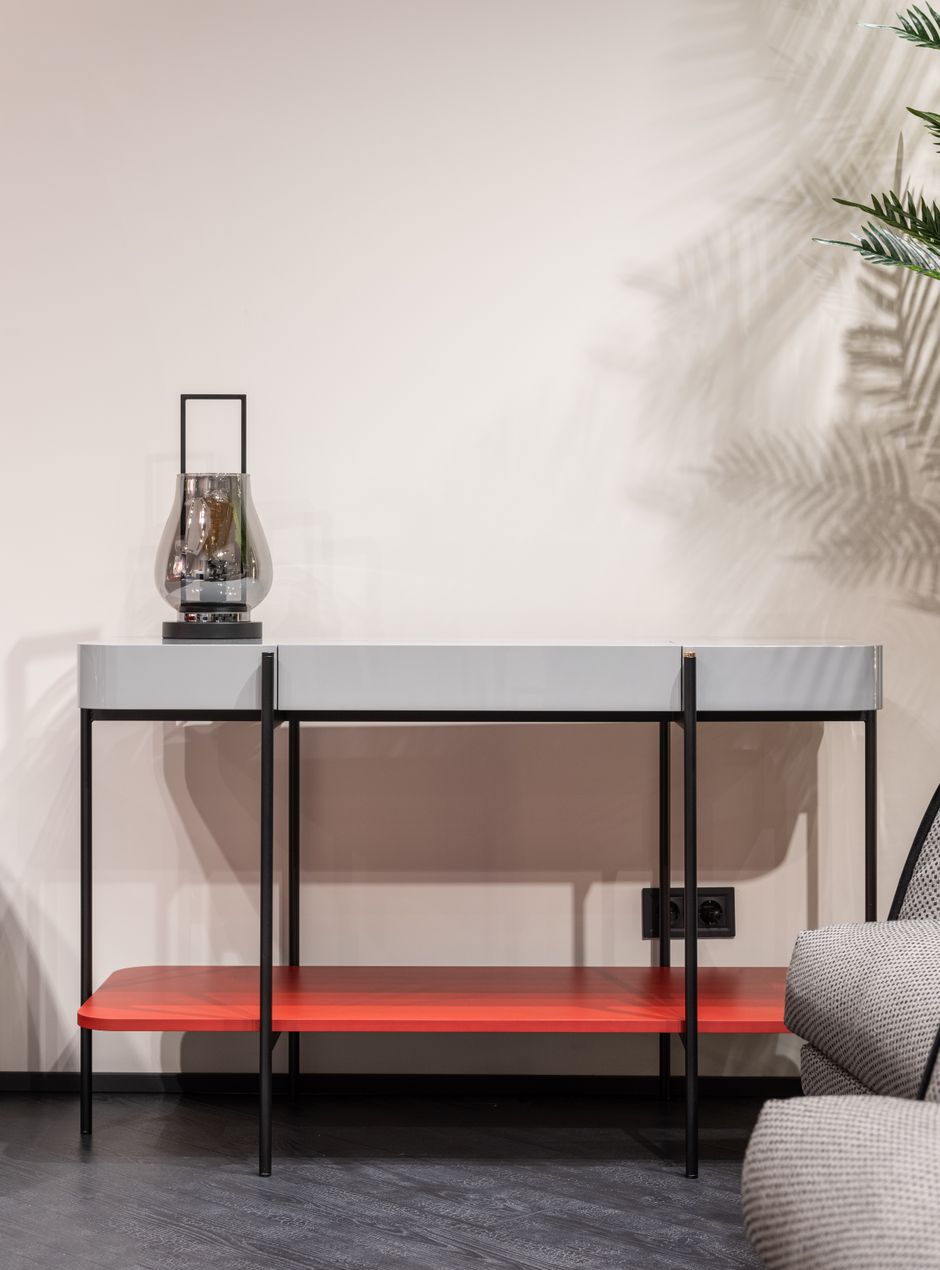
Plenty of contemporary consoles pair a wooden frame with a glass top or steel legs. Neither is inherently better. A glass top is easy to wipe but shows every fingerprint and dust film; a steel frame is sturdy but wants a sealed finish to resist rust in a steamy hallway. Weigh the look against the upkeep honestly.
Reading the dimensions
Height is usually 75–80cm. Width runs from about 80cm for a narrow hallway console to 150cm and beyond for a living-room piece. Depth, again, is the one to check first. Then do the weight arithmetic: a lamp at 2–3kg, a mirror at 3–5kg and decorative objects at 2–3kg already puts you at 7–11kg, so a 10kg limit leaves no margin while a 15–20kg limit gives you room to breathe.
Style categories

Rustic consoles show grain, chunky legs and distressed finishes and suit farmhouse and traditional rooms. Contemporary designs are clean-lined and often mix materials. Transitional pieces — solid wood, simple legs, smooth finish — are the safest bet for most UK homes because they sit happily in either scheme. Entryway consoles tend to be narrower and lower; sofa consoles are shallower and lower still, designed to sit directly behind the back cushions.
Budget Bands and What Each Gets You
The bands below are category aggregates across the whole market, not the price of any one table. They tell you what to expect before you start filtering.
| Band | What you get | Best for |
|---|---|---|
| Budget: up to about £45 | Wood-effect or thin veneer over particleboard, simple nailed or cam-lock assembly, 10–15kg capacity, basic lacquer | Temporary setups, low-traffic corners, testing whether a console suits the room |
| Mid-range: about £45–£110 | Solid-wood frame and legs (usually oak, pine or ash), veneered panels, dowelled joints, multi-coat lacquer or hand-rubbed oil, 20–30kg capacity | Most UK homes — the sweet spot for durability and style |
| Premium: above about £110 | Solid hardwood throughout, hand-finished surfaces, superior joinery, bespoke sizing, 30–50kg+ capacity | Statement pieces, heirloom buys, awkward spaces needing a custom size |
At the budget end, filter hard on depth and stability. Avoid anything under 25cm deep unless it is purely for display, and look for four-point leg support rather than a wobbly frame that relies on a single central brace. At mid-range, check the species and the joint method, confirm depth sits in the 25–35cm sweet spot, and match the finish to the room. At premium, ask whether the timber is sustainably sourced, what the finish needs in maintenance, and whether bespoke depth or height is available — that is where the money genuinely goes.
Our picks on this page span all three bands and the styles most buyers actually choose. Rather than pointing at one table, use the widget to filter by depth, wood type, style, finish and hybrid materials, then read the reviews for the things spec sheets omit: how hard assembly really is, whether the colour matches the photos, and whether buyers found the depth right in practice.
Common Mistakes and Quick Answers
- Choosing depth from photos: measure the space and your lamp before you buy, and when in doubt go deeper rather than shallower.
- Overloading a light table: a sagging top never recovers and the joints follow; buy at least 50% more capacity than your estimated load.
- Expecting the cheapest to last: a particleboard console at the bottom of the budget band is a stopgap, not a decade-long purchase.
- Ignoring finish maintenance: oil and wax need re-oiling every six to twelve months; lacquer is lower-maintenance but must be properly sealed to resist chipping.
Can a console double as a desk? Occasionally, but most are not built for a monitor and daily leaning. If you need that, choose 35cm+ depth and 30kg+ capacity, and accept it is a compromise.
How do I care for an oiled top? Dust weekly, re-oil every six to twelve months with the maker's specified oil, and wipe spills with a barely damp cloth rather than a wet one.
Is a glass top easier? Easier to wipe, harder to keep smudge-free; a lacquered wooden top is the lower-maintenance choice overall.
Console or sofa table? A console stands alone against a wall or in a hallway; a sofa table is shallower and lower to sit behind the cushions. Check depth and height rather than the label.
Get the depth, construction, capacity and finish right and the styling takes care of itself. That is the whole game with a wooden console table — and it is why the mid-range band, roughly £45–£110, is where most UK buyers should be looking.