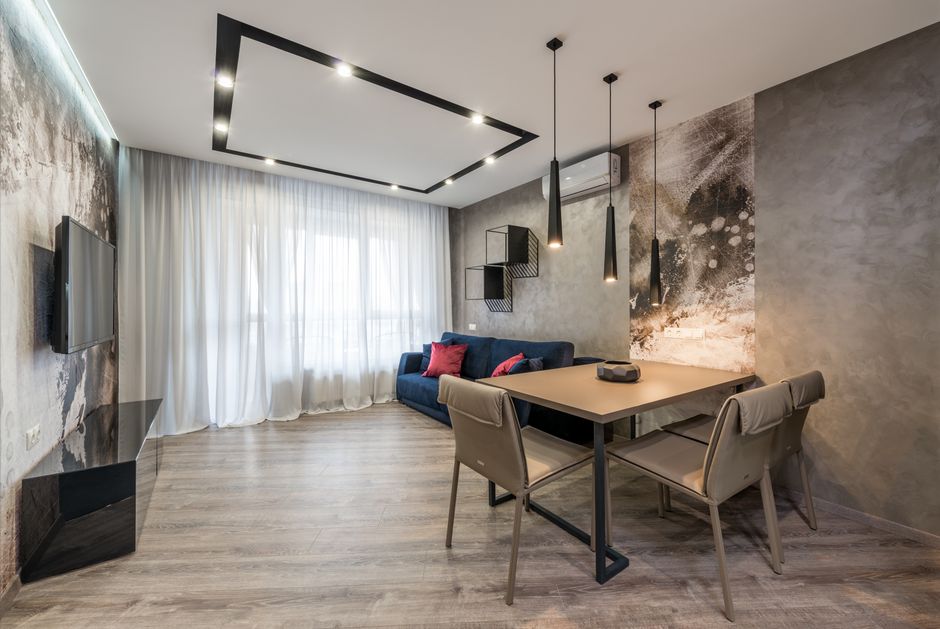
How to Choose Slim Dining Tables: UK Buyer's Guide
Quick answer: Choose a slim dining table if your room is under about 3 m wide, if you want at least 1 m of clear floor behind pulled-out chairs, or if you're furnishing a small flat or kitchen-diner. Measure length and width first, decide whether you need extendable length, then pick materials and finish to suit your décor and household.
The persistent myth is that slim equals flimsy, or that slim tables are only for tiny spaces. Neither holds up. Plenty of premium pieces use the same solid oak or powder-coated steel construction as full-width tables — they're simply proportioned for intelligent living. The real decision isn't whether to go slim; it's which materials, construction method and style will survive your household and how much you're prepared to spend.
This market has matured fast because small-space living is now the norm in the UK, not the exception. Developers have stopped pretending every buyer gets a separate dining room, and manufacturers have responded with a well-stocked range of genuinely beautiful, durable slim tables at almost every budget. The hard part isn't finding options — it's choosing the right one. What follows are the five decisions that actually determine whether you'll love the table in five years or resent it in five months, plus the specs worth decoding and the mistakes that quietly waste money.
The Five Decisions That Matter Most
Length and seating capacity
Slim tables typically run 120–200 cm long. A 120–140 cm table seats four comfortably (two per side); 160–180 cm seats six; 200 cm and above seats eight. Here's the first counter-intuitive point: a slim table at 160 cm often feels less cramped than a standard-width table of the same length, because people's elbows have more room to move sideways. You're trading a little front-to-back legroom for lateral elbow room, and most diners prefer that trade — it's why slim tables work so well in tight rooms.
Measure your dining space length and subtract 1 m for chairs at each end (0.5 m per chair). A 2.5 m run means a 150 cm table is your ceiling; a 2 m run caps you at 100 cm. This single calculation prevents the classic "chairs jammed against the wall" problem that makes a good table feel wrong. In a typical 1930s semi dining room of around 3 m by 3.5 m, a 160 cm slim table leaves comfortable circulation on all sides.
Materials and durability
The second counter-intuitive fact: solid oak is not automatically more durable than quality engineered wood or steel. Oak is beautiful and heavy, but it moves with humidity and can split when room temperatures swing — a real risk in UK kitchens that run hot and steamy then cold. Engineered wood with a genuine veneer, or a steel frame with a powder-coat finish, can be more dimensionally stable and need less maintenance. Premium solid oak tables are built to accommodate movement; budget solid oak often isn't, and develops gaps or warping within a couple of years.
- Solid wood (oak, walnut, ash): beautiful, heavy, needs periodic care, premium price, lasts decades when well made.
- Engineered wood (plywood core, real veneer): stable, lighter, lower cost; quality varies enormously, and a well-made engineered table will outlast a poorly made solid one.
- Steel frame with wood top: modern, industrial, very stable, and the narrow frame suits small spaces particularly well.
- Leather or upholstered tops: rare in slim formats, luxurious, but hard to clean and a poor match for young children.
Extendable versus fixed length

Extendable slim tables typically cost £40–£80 more than fixed versions. They earn their keep if you host regularly, but they're heavier to operate and the leaves need storing. If you entertain fewer than four times a year, a fixed table is the better buy; host more often and extendable makes genuine sense. For a slim table, butterfly leaves (stored beneath the top) are usually sufficient and simpler than self-extending mechanisms, which are smoother but can jam.
Style and finish
Slim tables come in modern minimalist (metal legs, clean lines), Scandinavian (tapered legs, light wood), industrial (steel and darker timber) and traditional (turned legs, deeper finishes). Match your existing palette — a mismatch here is the single most common cause of buyer's remorse. In a white-and-grey kitchen-diner, a light oak Scandinavian piece reads calm; drop a dark industrial slab into the same room and it fights everything around it.
Construction quality signals
Look for solid joinery (mortise and tenon rather than dowels alone), a tabletop of at least 2.5 cm for solid wood or 1.8 cm for engineered, and legs that are bolted rather than merely screwed. These details are what separate a table that lasts a decade from one that wobbles after two years. They're rarely shouted about in listings, so read the spec sheet and the reviews carefully.
Materials, Types and Sizing Explained
Reading the dimensions
Slim Dining Tables


Listings give length × width × height. For slim tables, length runs 120–200 cm and drives seat count. Width sits in the 70–85 cm slim band against a 90–100 cm standard. If you have under 1.5 m of width available, go 70–75 cm; with 1.8 m or more, 80–85 cm is comfortable. Height is almost always 75 cm — the standard dining height. Anything below 72 cm or above 78 cm is a red flag unless it's deliberately bar-height (105–110 cm), which isn't a dining table at all.
Leg clearance and overhang
Legs should sit at least 30 cm in from each end — the overhang. If legs are too close to the ends, chairs won't tuck in properly and the table looks unstable even when it isn't. Check the product photos for leg position before you commit; a slim table with legs inset too far is simply poor design, and no finish will rescue it.
Weight and stability

A solid wood slim table weighs 40–60 kg; engineered wood 25–40 kg; a steel frame 30–50 kg depending on the top. Heavier isn't automatically better — a well-engineered 35 kg table can be more stable than a badly made 55 kg one. Scan reviews for wobble complaints. One mention in fifty is normal; a pattern of them means walk away regardless of price.
Finishes decoded
- Oiled or waxed wood: natural look, needs re-oiling every 1–2 years, marks easily — not ideal for families.
- Lacquered or sealed: protective coat, low maintenance; gloss shows fingerprints, matte shows dust.
- Matte powder-coat steel: durable, hides dust, industrial feel.
- Stained wood: colour applied then sealed; hides grain variation and is easier to maintain than oil.
Seating comfort: depth and legroom
A 70 cm table gives roughly 35 cm per person front-to-back from table edge to chair back — tight but workable. An 80 cm table gives about 40 cm, which feels noticeably less cramped. If you're tall or like to spread out, go 80 cm and above; if space is critical, 70 cm is acceptable for occasional use. This is the spec buyers most often overlook, and it's the one they notice every single meal.
Budget Bands Explained
| Band | What you get | Durability | Best for |
|---|---|---|---|
| Up to about £120 | Engineered top, simple metal or wooden legs, basic finish, fixed length, lightweight | 3–5 years with light use; prone to wobble if legs aren't braced | Renters, temporary setups, tight budgets, second tables |
| About £120–£250 | Solid wood or quality engineered wood, proper joinery, extendable options, better finishes | 5–8 years, often a decade with normal use | Most UK homes — where value concentrates |
| Above about £250 | Solid hardwood (oak, walnut, ash), designer finishes, small-batch or handmade, bespoke sizing | 10–20+ years, often repairable and refinishable | Investment pieces and focal-point dining rooms |
In the budget band, filter hard: a minimum 2 cm top thickness, four-point leg bracing or cross-supports, and reviews that specifically mention stability. Avoid anything with more than one wobble complaint. At mid-range, insist on solid wood or veneer over plywood (not particleboard), mortise and tenon joinery where stated, and at least 2.5 cm top thickness for solid timber. At premium, check the species, favour artisan or small-batch makers, look for a warranty of five years or more, and read reviews for mentions of longevity and character rather than just looks.
The price-to-value sweet spot is real. Our picks on this page currently track eight options rated 4.7–4.9★, and most cluster in the mid-range band where design, materials and durability balance properly. A £180 solid oak table will outperform a £120 engineered one; a £300 table is beautiful but not proportionally more durable for most households. Buy the construction, not the badge.
Common Mistakes and FAQs
- Buying before measuring. You end up with a table that's too long or too wide, and returns cost time and money. Measure length, width and ceiling height (for pendant lights) and write it down before you browse.
- Choosing style over stability. A beautiful table that wobbles will drive you mad. Read reviews for wobble, movement and quality complaints — a pattern means skip it.
- Assuming solid wood is always better. A well-made engineered table at £160 will be more stable and last longer than a poorly made solid one at £180. Judge construction, not material alone.
- Ignoring leg clearance. Legs too close to the ends mean chairs won't tuck under and the table looks unbalanced. Check the photos.
- Forgetting delivery and assembly. Tables over £200 often arrive flat-packed or part-assembled. Budget for delivery and a couple of hours of assembly, or pay for a assembly service and factor it into the total.
Can I fit a slim table in a 2 m × 3 m room? Yes. A 140 cm slim table at 70 cm wide fits comfortably, leaving around 0.8 m clear on two sides and 0.5 m at each end for chairs.
Are slim tables less stable than standard ones? No, if well made. Stability comes from joinery, leg bracing and weight distribution, not width. A premium slim table is as stable as a premium standard table.
Should I buy extendable? Only if you host four or more times a year. Extendable adds cost, weight and storage complexity; if you rarely need extra seats, fixed is simpler and cheaper.
What's best for a family with young children? Engineered wood with a sealed matte finish. It hides marks, resists stains and cleans up far more easily than oiled solid wood. Avoid light finishes and natural oils.
A slim dining table is a smart buy for modern UK homes: the market is mature, prices are fair, and genuine quality is available at every band. Measure your space, decide on materials and style, read reviews for stability and longevity, and pick the band that matches how long you'll keep the table. Browse our live picks with these criteria in hand and you'll land on one you're still glad to sit at years from now.