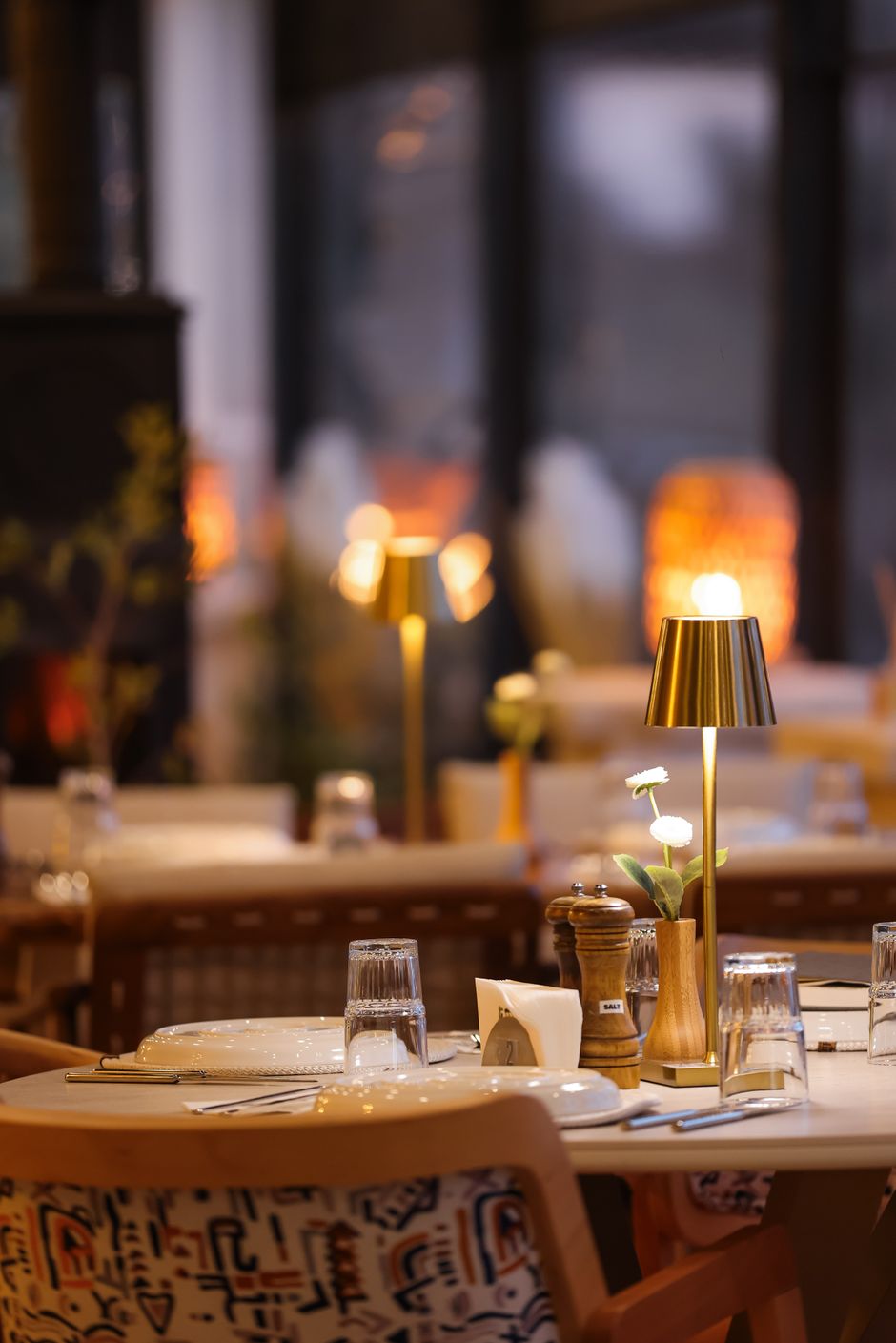
How to Choose Cordless Table Lamps: UK Buyer's Guide
What follows is not a list of features to tick. It is a way of thinking about the purchase so that the lamp you buy in October is still the one you reach for next summer. We have tracked eight options across the category, all rated between 4.8 and 4.9 stars by UK buyers, and the pattern in the reviews is consistent: people who bought on looks alone often mention dim light or a battery that fades; people who bought on specs tend to be quietly satisfied. The live picks on this page reflect current stock, but the principles below will hold long after any single model is discontinued.
Three forces have pushed cordless lamps into the mainstream. Remote and hybrid working made task lighting a daily need rather than a luxury, and a lamp you can move from desk to dining table suits a home that changes function through the day. Rental culture means many people cannot chase walls or add sockets, so a lamp that needs no wiring is the only realistic option. And the post-pandemic boom in garden entertaining created a demand for light that travels outdoors without an outdoor-rated circuit. A cordless lamp answers all three, but only if the battery survives the evening and the light flatters rather than flattens.
The single most useful reframe is this: you are not buying a lamp, you are buying a solution to a specific lighting problem. Ambient fill for a dark hallway, focused task light for a reading chair, soft mood light for a supper table — each demands different priorities. A lamp that dims to a warm glow is wasted as a desk light; a 400-lumen workhorse is harsh beside a bed. Decide the job first, and the shortlist narrows itself. The sections that follow take the decisions in order of consequence, explain how to read the numbers without a physics degree, show what each price band genuinely delivers, and flag the mistakes that separate a bargain from a false economy.
The Decisions That Matter Most: Battery Life, Light Quality and Form Factor
Three decisions dominate everything else. Get them right and almost any lamp in your budget will serve you well; get them wrong and you will notice within a fortnight.
Runtime — and the spec that misleads
Most buyers assume cordless means all-day. It does not. A typical lamp manages six to twelve hours on a charge, and the figure depends heavily on brightness. Here is the counter-intuitive truth that catches people out: a lamp quoted at twelve hours is almost always quoted at minimum brightness, which is technically honest and practically useless. What you need to know is the runtime at full output, or at the brightness you will actually use. If you want three hours of bright light over dinner, a six-hour full-brightness lamp is fine. If you want it glowing all evening, you need ten hours or more, or you will be charging it daily. Battery chemistry matters too: lithium-ion, standard from mid-range upward, holds charge for weeks when idle and degrades slowly, whereas older nickel-metal hydride cells self-discharge and fade faster. By month six the difference is obvious.
Light quality — colour temperature and colour rendering
A lamp can be bright and still produce ugly light. Colour temperature, measured in kelvin, sets the mood: around 2700–3000K feels warm and intimate, ideal for a lounge or bedroom; 4000–4500K feels crisp and energising, better for a desk or kitchen. The second counter-intuitive point is that brightness and light quality are not the same thing. A 400-lumen lamp with poor colour rendering — a CRI below 80 — will look harsh and make food, skin and fabric look dull. A 300-lumen lamp with a CRI of 90 or above will feel more natural and flattering. If a spec sheet stays silent on CRI, assume it is mediocre and ask before you buy. In a UK dining room with warm oak furniture, that difference is the gap between a room that looks inviting and one that looks like a showroom under strip lighting.
Form factor — base, height and materials
A cordless lamp has to be stable, fit its surface and suit the room. A tall, narrow base on a small side table looks precarious, and a heavy brass or glass base on a floating shelf is overkill. Height matters more than buyers expect: a 30cm lamp on a 60cm table reads as proportional, while a 50cm lamp on the same table dominates it. Check dimensions, not just the photograph. Materials drive both durability and maintenance — glass and brass clean easily and age gracefully, while painted metal and plastic are lighter and cheaper but show dust and chips. On a windy patio, a flimsy base is a disaster waiting to happen; in a bedroom corner, it hardly matters.
The hierarchy is worth stating plainly, because it stops you paying for the wrong thing:
- Runtime at full brightness — non-negotiable, because a dead lamp is furniture.
- Colour temperature — must match the room's purpose, not your taste in photographs.
- Base weight and footprint — safety first, aesthetics second.
- Colour rendering — the comfort factor most buyers only notice when it is missing.
- Materials and finish — longevity and style, the tie-breaker once the rest is settled.

Price is deliberately absent from that list because it is a constraint, not a decision. Once you know what you need, the band narrows itself.
Materials, Types and How to Read the Specs
The cordless category is narrower in style than mains lighting, but construction varies enormously, and the details are where money is won or lost.
Materials that earn their keep
Glass bases are common in the mid-range and premium bands: elegant, easy to wipe, and substantial enough to feel planted. They are also fragile if knocked and quick to show fingerprints, which matters in a busy kitchen. Brass, or a convincing brass finish, ages beautifully and suits period and contemporary rooms alike, but real brass is heavier and dearer, and budget versions often use painted metal that chips at the edges. Shades deserve equal scrutiny. Fabric diffuses light softly but collects dust and stains; glass or acrylic is easier to clean and more durable but can glare if the light source is not properly diffused. For a lamp you will carry from kitchen to garden, durability usually beats delicacy.
Battery and charging specs
Lithium-ion is the standard above budget, rechargeable several hundred times — roughly two to three years of daily use — and slow to self-discharge. Charging time matters if you use the lamp often: most models fill in two to four hours. USB-C is the convenient choice because any charger will do; a proprietary cable ties you to the manufacturer, though it sometimes charges faster. Capacity in milliamp-hours only means something alongside brightness: a 3000mAh cell driving a 300-lumen output lasts far longer than the same cell driving 500 lumens. Treat mAh as half the equation, never the whole.
Brightness and dimming
Cordless Table Lamps


Think in lumens, not watts. For a cordless table lamp, 200–400 lumens is typical and 500 or more is genuinely bright. Task work — reading, writing, chopping — wants 300 or more; ambient and mood lighting can work at 150–250. Dimmability is the quiet hero of the category: full output for work, a low glow for supper, one lamp doing two jobs. It costs little to include and adds enormous flexibility, so check for it explicitly rather than assuming.
Rechargeable versus replaceable
Most modern lamps have built-in rechargeable cells charged by cable. A few budget models take AA or AAA batteries, which suits occasional use but is expensive over time and wasteful. Rechargeable is now the default and almost always the better value.
When you read a spec sheet, work through this checklist in order:
- Runtime at full brightness — the honest figure, not the marketing one.
- Colour temperature in kelvin — match it to the room's job.
- Brightness in lumens — 300+ for tasks, 150–250 for mood.
- Battery chemistry — lithium-ion preferred.
- Charging method and time — USB-C is the flexible option.
- CRI — 90+ is good, 80–89 acceptable, silence is a warning.
- Dimmable — yes or no, and how many steps.
- Base weight and height — for stability and proportion.
Budget Bands: What You Get at Each Price Level
The UK market clusters into three bands, each with clear trade-offs. Knowing them stops you overpaying for features you will never use or underpaying and regretting it by Christmas.

Budget: up to about £30
You get a functional lamp with six to eight hours of runtime, 200–300 lumens, and basic materials — painted metal or plastic bases, fabric or plastic shades. You sacrifice battery longevity, brightness range, and often colour quality, with cooler, harsher light and slower charging. Bases can feel light and tippy. This band suits occasional use: a guest room, a garden table in summer, or a trial run before committing. Filter for a lithium-ion cell if one is offered, USB-C charging, at least 250 lumens, and dimming if you can find it.
Mid-range: about £30–£50
This is where value peaks. Expect eight to twelve hours of runtime, 300–400 lumens, better materials such as glass or brass, and charging in two to three hours. Lithium-ion is standard and light quality is noticeably better. You give up little beyond designer detailing and smart features. For daily use in a home office, bedroom or entertaining space, this band is the sensible default for most buyers. Filter for 300+ lumens, a colour temperature of 2700–3000K for warmth or 4000K for tasks, dimming, and a base of at least 500g so it stays where you put it.
Premium: above about £50
Here you get solid brass or hand-blown glass, twelve hours or more of runtime, 400+ lumens, excellent colour rendering at CRI 90+, fast charging, and sometimes adjustable colour temperature or app control. You are paying for design, longevity and refinement rather than raw function. It suits design-led rooms, professional spaces, or anyone who wants a lamp to last five years without noticeable degradation. Filter for CRI 90+, adjustable colour temperature if you want flexibility, materials that age well, and a longer warranty.
| Feature | Budget (to ~£30) | Mid-range (~£30–£50) | Premium (above ~£50) |
|---|---|---|---|
| Runtime | 6–8 hrs | 8–12 hrs | 12+ hrs |
| Brightness | 200–300 lm | 300–400 lm | 400+ lm |
| Battery | Mixed | Lithium-ion | Lithium-ion |
| Charging | 4+ hrs | 2–3 hrs | 1–2 hrs |
| Base material | Plastic/metal | Glass/brass | Solid brass/glass |
| Best for | Occasional use | Daily use | Design/professional |
The live widget on this page shows the eight tracked options across all three bands, rated 4.8–4.9 stars, so you can compare current stock against the criteria above rather than against marketing copy.
Common Mistakes and Practical Questions
Most disappointments trace back to a handful of avoidable errors.
- Confusing brightness with quality. A bright lamp with poor colour rendering looks harsh; check CRI as well as lumens.
- Trusting headline runtime. Manufacturers quote at minimum brightness; ask for the figure at full output.
- Ignoring base stability. A beautiful lamp that tips is useless, especially with children or pets about.
- Assuming all charging is universal. Proprietary cables happen; USB-C is the flexible choice.
- Mismatching colour temperature. A cool 4500K lamp beside a bed feels clinical; match the room's job.
- Buying the cheapest and expecting longevity. Older battery tech fades fast; mid-range is better value over time.
- Skipping the dimmer. A non-dimmable lamp at full output is too bright for mood; dimming is cheap and transformative.
How often will I need to charge it? Divide runtime by daily use. A ten-hour lamp used three hours a day needs charging every three or four days; a six-hour lamp, every two. Always calculate at the brightness you actually use.
Can I use one outdoors? Yes, with a stable base and weather-resistant materials — glass or sealed metal rather than fabric. Bring it in during heavy rain, and expect battery performance to drop in cold weather, which matters on a British autumn evening.
How does it differ from a rechargeable reading light? A table lamp is built for ambient or task light in a room, with a larger shade and base; a reading light is smaller, more portable and often clips on. For a desk or bedside, the table lamp wins; for travel, the reading light is lighter.
Will leaving it plugged in ruin the battery? Modern lithium-ion cells have smart charging that stops overcharging, so occasional overnight charging is fine. Leaving it plugged in permanently will still shorten its life, so unplug once full if you want maximum longevity.
Choose on runtime at full brightness, colour temperature and a base that stays put, and let the band follow. Mid-range is where most UK buyers find the balance, budget suits occasional use, and premium buys design and durability rather than function. Compare the live picks against those three decisions and you will shortlist in minutes rather than weeks.