How to Choose Bath Towel Sets: UK Buyer's Guide
Two facts catch most buyers out. First, grams per square metre matters far more than thread count or the word "Egyptian" on the label; density is what you feel and what absorbs water. Second, and more counter-intuitive, a well-made cotton-rich blend often outlasts pure cotton in a hard-water household, because the mineral residue that stiffens towels clings less readily to blended fibres. Neither point appears on the average product page, which is why shoppers fixate on origin stories instead of specs.
Our live widget on this page tracks eight options across the category, all rated five stars by UK buyers, so the shortlisting has largely been done for you. What the widget cannot tell you is which of those sets suits your bathroom, your water and your laundry habits. That is the job of the rest of this guide: a framework you can apply whether you are replacing a worn-out set or kitting out a bathroom for the first time.
The Decisions That Matter Most
Retailers push fibre type and thread count because both are easy to print on a label. The decisions that genuinely shape how a set performs are density, composition, your household's water and your washing discipline — and they interact, which is why a cheap set can outperform an expensive one in the right conditions.
Density is the spec that predicts everything
Grams per square metre tells you how much fibre is packed into the cloth, and it is the best single predictor of absorbency, plushness and how the towel ages. Under about 350 gsm a towel feels thin and dries fast but drinks little water — fine for a guest room, disappointing for a daily shower. Most mid-range sets sit between 400 and 550 gsm, the sweet spot for domestic use: thirsty, soft and quick enough to dry between uses. Sets above 600 gsm feel lavish in the shop, but beyond roughly 550 gsm you are buying weight rather than performance. A 500 gsm towel and a 650 gsm towel dry you equally well; the heavier one simply takes longer to dry, hogs more cupboard space and costs more to launder. In a small UK bathroom with no window, that slower drying is how towels end up smelling musty.
Composition: why pure cotton is not automatically best
Cotton is the default for good reason — absorbent, durable, affordable. But a cotton-rich blend with a modest share of polyester or bamboo viscose frequently outlasts pure cotton in real homes. The blend dries faster, resists pilling and shrugs off the mineral buildup that stiffens towels in hard water. Pure cotton wins narrowly on first-wash softness; blends hold their softness longer. If you are in a soft-water area with disciplined laundry habits, pure cotton is a fine choice. Otherwise, a blend is the pragmatic buy.
Water hardness is the variable nobody mentions
Much of the UK — the South East, East Anglia, much of the Midlands and London especially — sits on hard water that leaves calcium deposits in towel fibres, making them stiff and dull within weeks. A set that feels luxurious in a soft-water home can feel like cardboard in a hard-water one. This single variable can make a £30 set outperform a £50 set. Either fit a softener to the machine or choose a blend that resists mineral cling; do not assume a higher price solves it.

Set size and household fit
Sets come as two-piece (two bath towels) or four-piece (two bath plus two hand towels). A two-piece is cheaper but forces a household of two or three to wash every three or four days. A four-piece costs more upfront yet stretches wash cycles to a week, which reduces wear and tear. For most UK homes the four-piece is better value over its life, even at a higher ticket.
Colour and dye stability
Neutral shades — white, grey, beige, navy — hold colour longer and hide soap residue and mineral marks. Brights and pastels fade faster and show staining sooner. If you intend to keep a set three years or more, neutral is the low-risk choice.
- Density first: aim for 450–550 gsm for daily family use.
- Blend for hard water: a cotton-rich mix resists stiffening better than pure cotton.
- Four-piece for two-plus people: fewer washes, longer life.
- Neutral colour: hides residue and fades more slowly.
- Check twist: a tighter twist pills less over time.
Materials, Types and Sizing Explained
Spec labels read like a foreign language, so here is a decoder for the terms you will actually meet.
Bath & Beach Towels




Fibre types and what they mean
Standard cotton is fine for most uses. Pima and Egyptian are longer-staple cottons that feel softer and last longer, but the gap narrows after a few washes, especially in hard water. Bamboo viscose, increasingly common in blends, is absorbent and resists mineral buildup — a genuine asset in hard-water postcodes. Microfibre is thirsty and quick-drying but less breathable and prone to holding odour, so it suits a damp flat better than a family bathroom. "Turkish cotton" is a marketing phrase with no formal definition; it usually means standard cotton grown in Turkey and is not inherently superior to cotton from anywhere else.
Ply and twist
Twist describes how tightly the yarn is spun; a tighter twist gives a more durable, less pilly towel. Ply is how many strands are twisted together — two-ply is standard, three-ply marginally tougher but heavier. For bath towels, two-ply with a high twist is plenty; do not pay a premium for three-ply outside a commercial setting.
Sizing

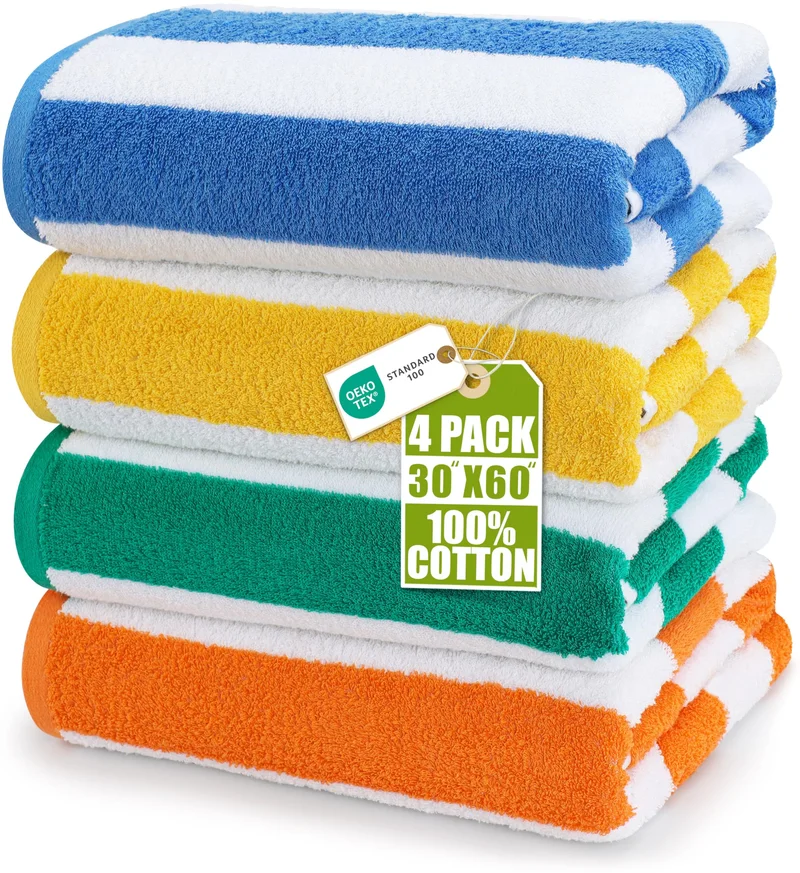
A standard UK bath towel is roughly 70 cm × 140 cm; hand towels around 40 cm × 60 cm. Some sets label the larger towel a "bath sheet" — oversized at about 90 cm × 160 cm. They feel indulgent but dry slowly and eat cupboard space, so stick with standard bath towels unless you have a large family or want extra coverage.
Certifications worth noting
Oeko-Tex means the towels have been tested for harmful chemicals — useful for sensitive skin. GOTS signals organic cotton, which is environmentally preferable but performs identically and costs more. Neither guarantees better durability or softness, so treat them as ethical and safety markers rather than quality ones.
Budget Bands: What Each Tier Gets You
Price tiers map onto clear trade-offs. Knowing what you actually get at each level prevents both false economy and needless overspending.
| Band | Typical set | What you get | Best for |
|---|---|---|---|
| Budget (up to about £30) | Two-piece, 350–400 gsm | Shorter fibres, more pilling, colour fades after 5–10 washes | Guest rooms, rentals, testing a colour |
| Mid-range (about £30–£40) | Four-piece, 450–550 gsm | Minimal pilling, colour holds through 30+ washes, soft for 2–3 years | Most UK households |
| Premium (above about £40) | Larger sets, 550–700 gsm | Longer-staple cotton, softer first wash, decorative finishes | Design-led or high-end lets |
At the budget end you are buying a two-piece in short-staple cotton that pills readily and loses softness within a handful of washes. It is a reasonable stopgap for a spare room or a rental, but buying cheap repeatedly costs more than buying once properly. The mid-range is where value peaks: a four-piece in cotton or a cotton-rich blend at 450–550 gsm, with minimal pilling and colour that survives a couple of years of normal care. This is where most homes should buy, and where you can afford to be choosy about a blend if your water is hard. Premium sets bring longer-staple cotton, higher density and often larger configurations with sateen borders or jacquard weaving; they feel softer on day one, but the performance gain over mid-range is marginal and the cost-per-use poor for everyday family life. Our live picks on this page span all three bands, all rated five stars, so filter by band and then check density and composition against the specs — the shortlist is sound, and the decision comes down to your water, your household and how much you value first-wash softness over long-run practicality.
Common Mistakes and FAQ
- Washing hot and overdrying: high heat breaks down cotton and speeds pilling — wash at 40°C and dry on low or line-dry to add a year or more of life.
- Using fabric softener: it coats fibres and kills absorbency, leaving towels waxy; a machine water softener does the job properly.
- Buying two-piece for a busy home: you end up washing every three days, which wears towels out faster than a four-piece ever would.
- Ignoring water hardness: without addressing it, even a premium set stiffens within weeks — this matters more than the price you pay.
Are Egyptian cotton towels worth the extra? Marginally softer on first wash, but the difference fades after 5–10 washes and is negligible in hard water. Standard cotton performs identically over time unless initial luxury feel is your priority.
How often should I wash bath towels? Every three to four days for a household of two or three. Washing daily accelerates wear; leaving them ten days or more invites odour and mildew. A four-piece set lets you hit that rhythm comfortably.
Should I wash before first use? Yes. New towels carry manufacturing residue and sizing that blunt absorbency; one wash and they feel softer and drink water properly from the start.
Do I need the most expensive set to avoid pilling? No. Pilling comes from fibre breakage during washing and drying, not price. A mid-range set with a tight twist and sensible care will pill less than a premium set washed badly.
Choosing well comes down to density and blend over brand and price. A mid-range cotton-rich set at around 500 gsm in a hard-water home will outperform a pricier pure-cotton set at 600 gsm every time. Start with our live picks, filter by your budget band, check the density and composition, and match the set size to your household — then wash cool, skip the softener and your towels will stay soft for years.