Home Décor Accessories Buying Guide UK 2026
Home Décor Accessories: What Actually Works in a UK Home
Walk into most British living rooms and you can tell within seconds whether the accessories were chosen or accumulated. The difference is rarely money. It's intent. Home décor accessories — the mirrors, vases, cushions, throws, baskets and wall pieces that sit on and around your furniture — carry more visual weight per pound than anything else you'll buy for a room. Yet they're the last thing most people plan and the first thing they regret.
Here's the practical reality on cost: across the UK market these pieces run from roughly £10 to about £180, and most sensible buys land between the budget ceiling of about £25 and the mid-range top of about £40. Spend under £25 and you're usually buying trend-led design with thinner materials and finishes that dull within a season or two. That's fine for a seasonal swap, less fine for the mirror above your fireplace. Knowing which items deserve the mid-range and which can safely stay cheap is the whole game — and it's what this guide unpacks.
Quick answer: Buy your anchor pieces — the mirror, the large vase, the cushions you'll live with daily — in the £25–£40 mid-range where materials and construction hold up for years, and use the under-£25 band for seasonal colour and experimentation. Reserve anything above £40 for one or two genuine statement pieces you'll still want in a decade.
The category itself is broad: wall art and mirrors, vases and candle holders, cushions and throws, planters, storage baskets, and purely decorative objects. None of it is furniture, but all of it changes how furniture reads. A well-placed mirror opposite a window can make a narrow Victorian terrace room feel twice its width. A coordinated run of three accessories can pull together a scheme that otherwise looks like a jumble sale.
The trap is buying in isolation. You spot something attractive, take it home, and discover it fights the sofa, the wall colour and the two other things you bought last month. The fix isn't a bigger budget — it's a framework: work out what your room actually lacks (colour, texture, scale, function), understand which materials deliver it, then pick a price band that matches both your budget and how long you want the piece to last. Everything below builds that framework, and the live picks on this page let you filter by band and material as you go.
The Decisions That Matter Most
Most people treat accessories as decoration — nice-to-haves that make a room prettier. That's backwards. The best ones solve problems: they add colour where walls are dull, texture where surfaces are too smooth, fill awkward gaps, and tie a scheme together. These are the decisions that actually move the needle.
Colour and scheme alignment
Before you buy a single thing, know your room's colour story. Are the walls neutral? Is there a dominant tone in the flooring or furniture? Are you reinforcing an existing accent or introducing a new one? Accessories are where you can afford to be bold, because a vase or cushion costs a fraction of repainting or replacing a sofa — but only if the choice is deliberate. Repeat one accent across three or four pieces (a throw, a cushion, a vase, a wall hanging) and the room reads as designed. Scatter five unrelated colours and it reads as clutter.
Counter-intuitive fact one: beginners assume variety equals interest, so they buy more colours. The opposite is true. Limiting your palette to two or three accents plus neutrals, then repeating them, creates the impression of a considered scheme. A room with five accent colours looks like someone shopped without a plan, however much each individual piece cost.
Scale and proportion
Scale is where isolated buying does the most damage. A small vase on a deep shelf disappears; an oversized mirror over a slim console feels aggressive. Measure your wall space, shelf depth and the furniture the piece will sit beside before you commit. A workable rule for wall pieces: they should occupy roughly half to three-quarters of the wall space above the furniture beneath them. For shelf objects, aim for one-third to one-half the shelf depth so the piece sits properly rather than overhanging.

Texture and material contrast
A room of only smooth surfaces — glass, painted walls, leather — feels cold. A room of only rough textures — raw wood, woven fabric, unglazed ceramic — feels unfinished. The magic is contrast. If your furniture is sleek and smooth, add woven baskets, linen cushions and rough ceramic. If the room already carries brick, beams and heavy fabric, balance it with something reflective: a glass vase, a metal-framed mirror, a polished ceramic.
Counter-intuitive fact two: reflective surfaces aren't just pretty — they bounce light and genuinely make a room feel larger and brighter. A single generous mirror placed opposite a window is one of the cheapest ways to transform a dark or cramped-feeling space. This is why mirrors command higher prices than their frame suggests: they're doing structural work, not just decoration. In a typical north-facing UK sitting room, that light-bouncing job matters more than the frame's finish.
Function versus decoration
Some accessories are purely visual; others earn their place by doing something useful. A basket that holds blankets and looks good, or a cushion that adds comfort and colour, works twice as hard. In a small flat or a tight terraced room, functional accessories are almost always the better buy. Ask of each piece: does this need to do anything, or is it purely visual? If purely visual, it must be either genuinely striking or part of a cohesive group. If functional, the good looks are a bonus.
Accessories


Materials, Types and Sizing Explained
Material determines durability, maintenance and how a piece behaves in your space — and it's the spec most shoppers skim past. Read it properly and you'll avoid most disappointments.
- Glass — transparent, reflective, suits almost any style, but shows dust and fingerprints and is fragile around children and pets. Frosted or textured glass hides marks far better than clear, and heavier glass usually signals better quality than thin.
- Ceramics and pottery — durable and endlessly variable. Glazed surfaces clean easily; unglazed ones develop character but stain. Slight irregularities in handmade pieces are a feature, not a flaw, and usually justify the higher price.
- Woven materials — jute, rattan, seagrass and linen add warmth and texture and age beautifully, but cost more. Synthetic weaves are cheaper and easier to wipe clean but never develop the same character. In a high-traffic hallway with a dog, synthetic may simply be the smarter call.
- Metals — brass, copper, steel and aluminium appear in mirrors, frames and objects. Polished finishes read modern and reflective; brushed or matte read understated. Cheap metal often has thin plating that wears through; premium pieces use solid metal or thicker plating. "Brass-plated" is not "solid brass" — check the composition.
- Wallpaper and wall finishes — a patterned or textured wall treatment is itself an accessory in the broadest sense, and it changes what you can hang on top. Busy paper wants quiet, simple pieces; plain walls can carry bolder art.
Sizing and weight. Always check dimensions in centimetres — width, height and depth — because a "large" vase to one retailer is a "medium" to another. Depth is the spec people forget, and it's the one that stops a piece sitting on a shallow shelf. Weight matters twice: heavier pieces usually mean better materials and construction, and if you're hanging anything you need the weight to choose the right fixings. A plasterboard wall in a modern UK new-build will not hold a heavy mirror on a single picture hook; you need the correct anchor, and knowing the weight before you buy is how you plan for it.

Finish and colour variation. Natural and handmade pieces vary slightly in tone and finish. That's normal and adds character — but if you need two vases to match exactly, buy them together in one order rather than separately, because separate batches can differ.
Budget Bands: What You Actually Get
Price doesn't perfectly track quality in this category. A well-designed mid-range piece can outlast a pricier trend-led one. But the patterns are consistent enough to shop by band.
| Band | What you typically get | Best for | Watch out for |
|---|---|---|---|
| Budget (up to about £25) | Trend-led design, smaller pieces, mass-produced materials | Seasonal swaps, testing a new colour, small shelves | Thin materials, finishes that wear, colours that fade |
| Mid-range (about £25–£40) | Better materials, considered design, pieces that last three to five years | Core accessories you'll keep, high-traffic cushions and baskets, anchor pieces | Paying mid-range for something that's really budget quality — check the spec |
| Premium (above £40) | Craftsmanship, premium materials, statement impact, longer production runs | One or two defining pieces, gifts, heirlooms | Paying for a name rather than a material — read what it's actually made of |
The mid-range is where most people should do most of their buying. A solid ceramic vase in that band will outlast a cheap one by years and look better doing it; a decent throw cushion uses fabric that survives washing. This is the band where value genuinely peaks. Budget pieces have their place — a cushion cover you swap with the seasons, a small vase to test a colour you're curious about — but treat them as temporary by design. Premium is for the mirror with the beautiful frame, the handmade ceramic, the sculptural piece that's genuinely art. One or two of those per room is plenty; more and you've spent a fortune on things competing for attention.
When you shop the live picks on this page, filter by band first, then by material, then check dimensions and weight before anything goes in the basket. Read reviews for how pieces hold up over months rather than days, and favour items with several consistent reviews over a single rave one.
Common Mistakes and Questions Answered
- Buying without measuring — the single biggest cause of returns. The vase that looked perfect in the shop looks wrong on your shelf because nobody checked the depth.
- Mixing too many styles — a boho basket, a minimalist mirror and a maximalist wall hanging in one room is visual noise. Commit to a direction.
- Ignoring scale — tiny pieces vanish in large rooms; large pieces overwhelm small ones. Proportion first.
- Buying the trend, not the piece — whatever is everywhere this season will look dated next. Buy what you actually like.
- Neglecting texture — all-smooth or all-rough rooms feel one-dimensional. Add contrast deliberately.
- Overcrowding shelves — five well-chosen pieces beat fifteen every time. Leave breathing room.
How many accessories does a room need? Enough to feel intentional, not so many it feels cluttered. For a medium room, start with five to seven key pieces — a mirror, a couple of vases, cushions, a throw, wall art, a basket — and add only where there's space and a purpose.
Should accessories match or differ? Coordinate, don't match. Identical pairs can feel formal or dated; pieces sharing a colour, material or style but differing in shape feel modern. Two vases in the same ceramic but different heights, or a cushion and throw in one colour but different textures, is the sweet spot.
How often should they be replaced? Budget pieces every year or two if you want to stay current; mid-range every three to five years; premium for a decade or more. Replace when something breaks, fades or genuinely stops working in the space — not simply because it's old.
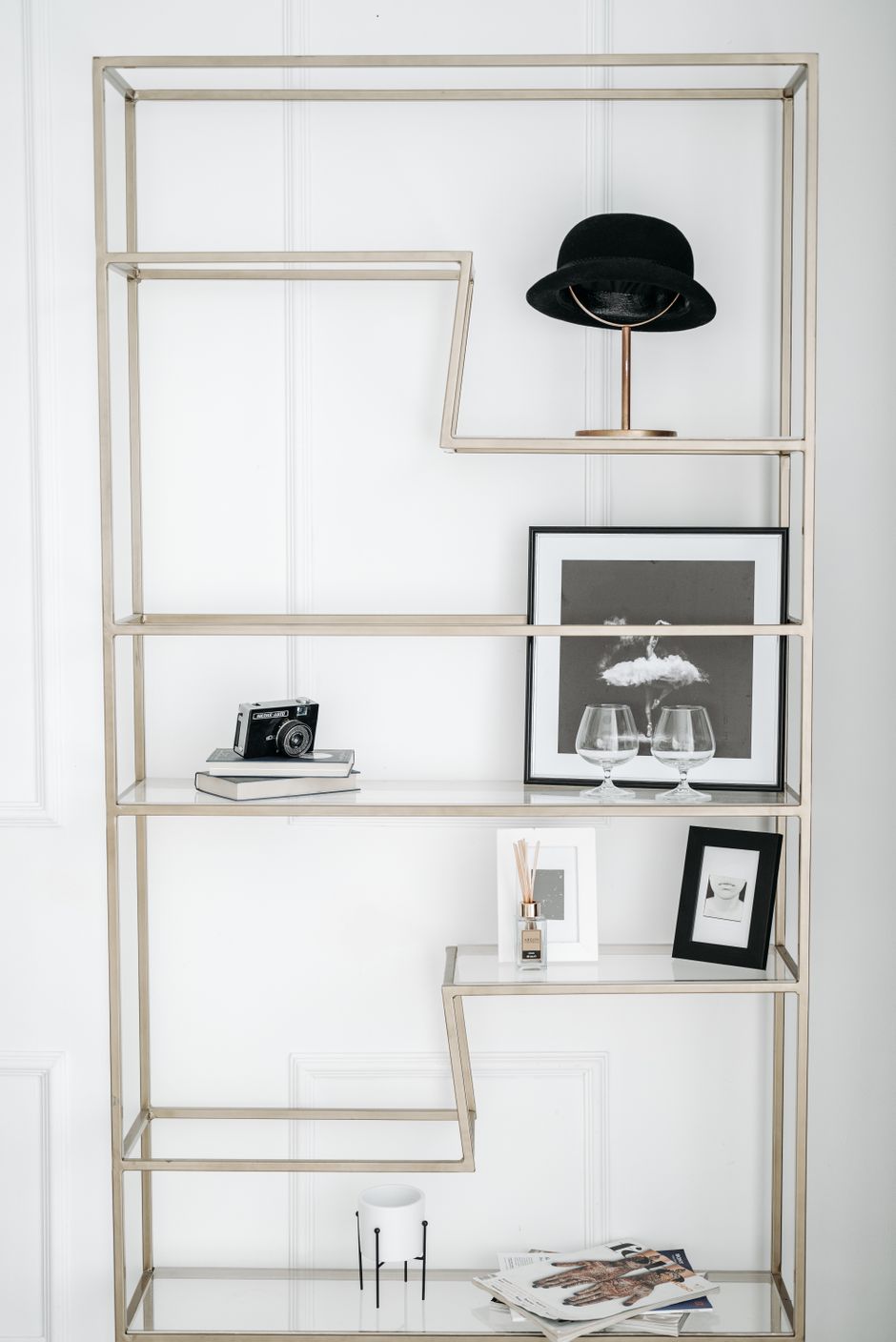
How should a shelf be arranged? Group in odd numbers, vary heights, leave negative space, and place heavier or darker pieces toward the back or bottom to ground the arrangement. Then step back and view it from across the room — balance is judged from a distance, not up close.
Get the framework right and accessories become the cheapest transformation available to a UK home: no trades, no mess, no major outlay. Understand what your room lacks, choose materials that supply it, spend in the band that matches how long you want the piece to last, and the room will feel finished rather than half-done. The live widget below shows current options across every band — use it to filter, check the specs, and buy with intent.