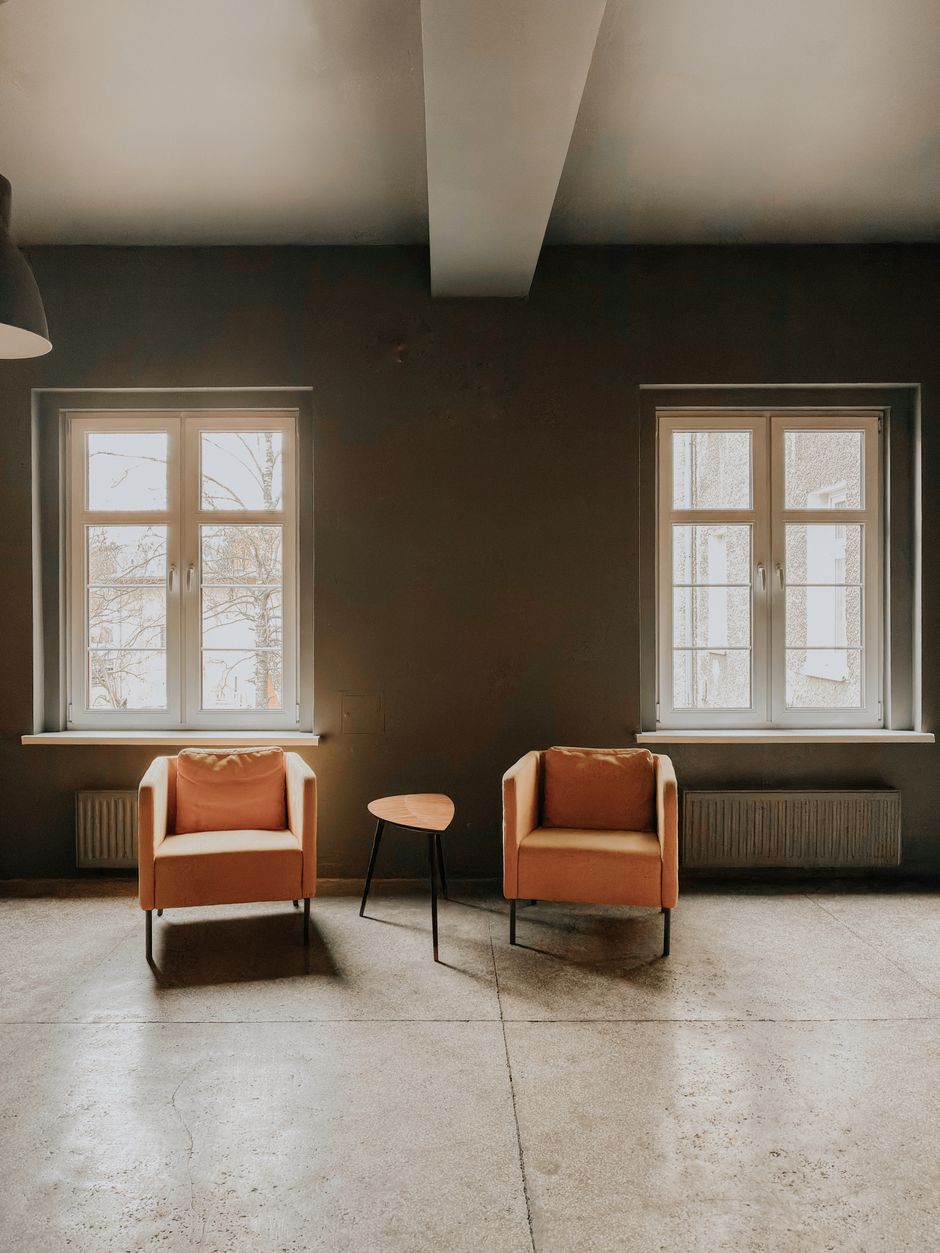
These chairs aren't just functional. Unlike a traditional wingback or club chair, a modern design leans on clean lines, minimal ornament and adaptability. That's why the same chair can sit happily in a minimalist living room, a Scandinavian-leaning flat, an industrial conversion or a more eclectic terrace house. The range available means almost every budget and every aesthetic has a credible option — the trick is knowing which compromises you're accepting.
What marks a chair out as modern
The defining quality is intentional simplicity and a focus on proportion rather than decoration. A modern armchair typically features:
- Straight or gently curved arms — no rolled scrolls or heavy carving, which keeps sightlines clean.
- Tapered or metal legs — turned and ornate legs read traditional; slim tapered timber or powder-coated metal reads contemporary.
- Neutral or bold solid upholstery — flat colour rather than heavy pattern, so the shape does the talking.
- Compact footprint relative to seat depth — the chair looks lighter in a room than its comfort suggests.
- A slightly reclined backrest — comfort engineered in without the chair looking like a lounger.
Most people get this wrong in one of two directions: they overspend on powered features they'll never touch, or they underspend and regret the comfort within months. The rest of this guide is about landing in the middle — understanding construction, matching the chair to your space, and reading the price tiers honestly so the widget does the final work for you.
How to Choose: What Actually Matters
Picking well isn't about finding the prettiest chair. It's about matching the piece to your room, your habits and your budget, in that order. Get the measurements wrong and nothing else rescues the purchase.
Size and proportion
Modern armchairs fall into three rough groups: compact for small rooms and tight corners, standard for most living rooms, and oversized for serious lounging. Measure before you fall in love with anything.
- Width: most sit between 70 and 90 cm; compact versions start around 60 cm.
- Depth: typically 75–95 cm; deeper chairs recline more but eat floor space.
- Seat height: aim for 40–45 cm so your feet rest flat and your thighs are supported.
- Arm height: usually 60–70 cm from the floor — check it if you like to lean your head on the arm.
Then measure the route in: front door, hallway, stair turn and the exact patch of floor the chair will occupy. A chair that won't clear your hallway is an expensive mistake, and a Victorian terrace with a narrow stair bend is the classic culprit.
Material and durability
Three material families dominate this category, and each behaves differently in a real home.
- Leather: durable, wipe-clean and ages well, but costs more and feels cool initially; faux leather is budget-friendly but less breathable.
- Wood frames: oak is common in UK furniture and is strong and long-lasting; solid timber beats plywood every time.
- Upholstery fabrics: linen and cotton blends breathe better, while performance synthetics resist stains — the sensible pick with pets or small children.
If you've got a labrador and a toddler, skip pale linen and go for a dark performance weave. It's the single decision that most affects how the chair looks in three years' time.
Comfort features
Modern chairs increasingly carry optional technology, and this is where budgets quietly inflate.

- Recliners: the seat and back adjust — genuinely useful for reading or TV.
- Massage and heat: a premium add-on that pushes a chair up a tier.
- Lift chairs: a motorised seat rises to help you stand — invaluable for mobility issues.
- Extended footrests: turn a chair into a part-time lounger.
Don't pay for what you won't use. If you never recline, a fixed-back chair is cheaper and usually looks cleaner in a small room.
Style alignment and budget reality
Modern isn't one look. It stretches from Scandinavian (light timber, neutral fabric, minimal arms) through mid-century (tapered legs, curved backs, bolder colour) to contemporary minimalist (metal frames, geometric shapes, monochrome). Look at your existing furniture and wall colour and let the new chair echo rather than clash — a mid-century chair against a period fireplace works; the same chair against glossy black built-ins can fight.
Your budget buys material quality and features, not necessarily comfort. A well-padded budget chair can be perfectly comfortable; a premium one justifies its price through longevity and finish. Decide whether you're buying for looks, for years, or for a specific function — then spend accordingly.
What You Get for Your Money
UK pricing clusters into three tiers, and understanding what each delivers stops you overpaying for the wrong things. The biggest value leap is from budget to mid-range, not from mid-range to premium.
Budget tier: up to about £240
You're buying a functional chair with basic construction and simpler materials.
Contemporary Armchairs


- Frame: solid softwood or plywood core.
- Padding: around 5–8 cm of foam.
- Upholstery: synthetic or basic natural fabric.
- Features: fixed back and arms, no reclining or motors.
- Best for: renters, guest rooms, home offices, or testing whether you like the style.
Expect roughly 5–7 years of normal use. The compromises are in fabric longevity and design refinement rather than outright comfort.
Mid-range tier: about £240–£500
This is where most buyers land, and rightly so — it balances cost against quality.
- Frame: solid hardwood, often oak.
- Padding: 8–12 cm, sometimes with memory foam.
- Upholstery: leather, linen, cotton blends or performance fabric.
- Features: basic recliner, heat function or extended footrest.
- Best for: primary living rooms and long-term daily use.
Expect 8–12 years. This tier is where design detail — tapered legs, better proportions — starts to show.
Premium tier: above about £500
Premium chairs prioritise materials, craftsmanship and advanced features.

- Frame: kiln-dried solid hardwood.
- Padding: 12 cm-plus, often layered.
- Upholstery: top-grain leather or designer performance textiles.
- Features: motorised recliners, massage, heat, lift functions.
- Best for: showpiece furniture, specific mobility needs, or buying once for 15+ years.
Expect 12–20 years or more. Premium pricing reflects durability and luxury as much as raw comfort.
| Aspect | Budget (up to £240) | Mid-Range (£240–£500) | Premium (£500+) |
|---|---|---|---|
| Frame | Softwood/plywood | Solid hardwood | Kiln-dried hardwood |
| Padding | 5–8 cm foam | 8–12 cm, often memory | 12+ cm, layered |
| Upholstery | Synthetic, basic | Leather, linen, blends | Top-grade leather, designer |
| Features | Fixed only | Recliner, heat options | Motorised, massage, lift |
| Durability | 5–7 years | 8–12 years | 12–20+ years |
Our Top Picks: Using the Live Widget
The widget on this page shows real modern armchairs currently in UK stock, with live pricing and availability updated daily — so what you see is what you can actually buy today. Our prose stays true a year from now; the widget carries the current detail.
Filtering to a shortlist
Work through the filters in a deliberate order rather than browsing everything.
- Price range: start with your tier so you're not tempted upward.
- Size: compact, standard or oversized, based on your measurements.
- Material: leather, timber frame type or fabric.
- Colour: neutral (grey, beige, black) or bold (navy, green, terracotta).
- Features: recliner, heat, massage, lift or extended.
Reading each listing properly
Every entry carries the detail that decides whether a chair suits you:
- Dimensions: width, depth, height and seat height — compare these against your measurements, not the photos.
- Material breakdown: frame type, upholstery and leg material.
- Ratings: we prioritise options with strong review counts over a lone five-star.
- Delivery and warranty: standard versus white-glove, assembly included, and cover length.
Four options currently tracked are rated 5 stars, spanning the tiers. Read two or three reviews on each, focusing on comfort, durability and whether the size matched expectations — recurring comments about assembly time or leather softening are the useful signals.
Then shortlist five to eight, compare dimensions side by side, check the returns window (most UK retailers offer 30–60 days) and buy. The widget also surfaces coordinating side tables and footstools if your budget stretches.
Styling, Placement and Practical Questions
Where it works best
Modern armchairs earn their place in living rooms as an accent beside a sofa or in a corner, in bedrooms as a window reading nook, in home offices paired with a side table, and in generous hallways as an anchor piece. Keep them away from radiators and direct sunlight, which fades upholstery, and leave at least 60 cm clearance for comfortable movement.
Styling that holds up
- Side table: a small timber or metal table turns the chair into a functional reading corner.
- Throw: drape a neutral or patterned throw over the arm for texture and warmth.
- Rug: a rug beneath anchors the chair and defines the seating zone.
- Colour balance: bold chair, neutral walls; neutral chair, bolder walls.
Frequently asked questions
How do I clean it? Leather wipes clean with a damp cloth and benefits from conditioner every six months; fabric needs weekly vacuuming, immediate spot-cleaning and a monthly upholstery clean. Always check the care label.
Can I get a custom colour? Usually at mid-range and premium tiers only, with a 4–8 week lead time and a cost premium — worth it for a statement piece.
Do recliners need more space? Yes — allow 30–45 cm of extra depth when fully extended, and check it won't block a doorway.
How long is delivery? Two to four weeks for in-stock items; white-glove with assembly can take four to six.
Is it good for back problems? Look for genuine lumbar support and at least 10 cm of padding, with a backrest angle around 100–110 degrees. If mobility is the concern, a lift chair in the premium tier is the sensible route.
Measure first, decide your tier, then let the widget do the comparing. The right chair is a decade-long purchase — buy it once, buy it properly.