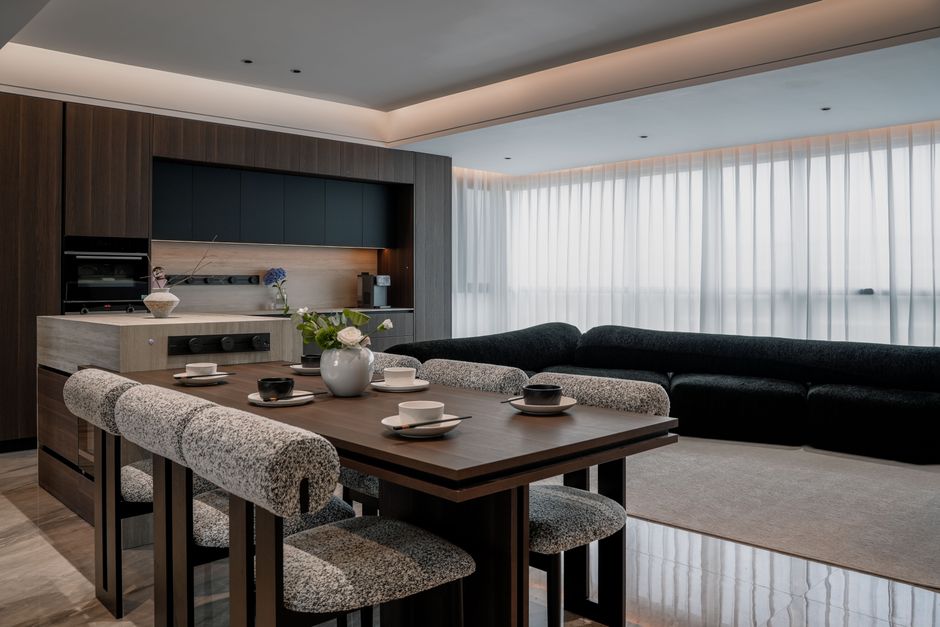
Best Contemporary Dining Chairs 2026
Dining chairs earn their keep in a way sofas don't. They get dragged across floors, sat on by guests who lean back, wiped down after Sunday roasts, and scrutinised every time you walk past the table. A wobbly leg or a seat that's gone flat is visible from the doorway. That's why the material and joint quality matter more here than almost anywhere else in the house.
Contemporary, in this category, means the absence of fuss: no cabriole legs, no carved backs, no heavy mouldings. Instead you get tapered or splayed legs, geometric silhouettes, tufted or plain upholstery, and materials chosen for their own sake — metal, velvet, wood. A velvet chair with slim black metal legs reads contemporary in a Victorian terrace just as it does in a new-build flat, which is precisely the point.
What separates the price tiers
- Frame material: budget chairs lean on tubular metal or basic hardwood; premium ones use solid timber with proper corner blocks and reinforced joints.
- Upholstery density: cheap foam compresses within a year; denser foam wrapped in wadding holds its shape far longer.
- Fabric quality: velvet at the budget end can pill and crush; better velvet has a tighter pile and a higher rub count.
- Finish: powder-coated metal resists chipping; thin paint on budget legs chips at the floor line within months.
- Floor protection: felt pads or plastic glides are a small detail that tells you whether the maker thought about real homes.
Eight options currently tracked in our live widget all sit at 5-star ratings, and they solve genuinely different problems — some prioritise stackability for tight kitchens, others maximise comfort for long dinners. Rather than name them (stock and prices shift weekly), use the widget to compare current products and prices side by side once you know what you're filtering for.
Matching Chairs to Your Table and Room
The most common mistake is buying chairs before measuring the table. A 180cm table seats six comfortably at 45–50cm per place setting, but chairs with wide arms or generous backs need more breathing room than the seat width suggests. Measure the table's underside clearance too: a chair back taller than the table apron looks top-heavy, and a seat height that doesn't clear the apron means bruised knees every meal.
Proportions that work
- Seat height: aim for 45cm, leaving roughly 25–30cm between seat and tabletop for comfortable legroom.
- Seat depth: 40–45cm suits most adults; deeper seats force shorter sitters to perch forward.
- Back height: low backs (under 80cm) keep sightlines open in small rooms; high backs suit formal dining rooms.
- Overall footprint: allow 60cm of floor space per chair so they tuck in without scraping.
Think about the room's light, too. A north-facing dining room in a Manchester terrace swallows dark woods and deep greys; pale wood and lighter upholstery lift it. A bright south-facing kitchen-diner can carry a bolder velvet without feeling heavy. Contemporary style rewards this kind of restraint — one strong material choice, repeated, beats a mix of competing finishes.

Mixing and matching
Mismatched chairs are a contemporary staple, but the trick is a shared visual anchor. Keep the seat height, leg style, or colour family consistent and vary only one element — say, the same silhouette in two upholstery colours, or the same fabric on a wood and a metal leg. A dining set where every chair is identical can look flat; a set where nothing relates looks like a jumble sale. Two or three coordinated variants is the sweet spot.
If your table is a statement — a chunky oak top, a marble-effect surface — let the chairs recede with slim metal legs and neutral upholstery. If the table is plain, the chairs can carry the personality. That single rule resolves most pairing dilemmas before you've opened a single product page.
Comfort, Materials and Build Quality
Comfort is where budget chairs most often fall down, and it's rarely obvious in a photograph. A seat that feels firm in the showroom can be a thin foam pad over a hard board; an hour into a dinner party, your guests know. Look for chairs described as upholstered with a padded seat rather than simply "cushioned", and favour tufted backs where the buttons indicate genuine layered padding rather than a decorative stitch.
Dining Chairs & Bar Stools


Material trade-offs
- Velvet: warm, tactile and excellent at hiding scuffs, but crush marks show in high-traffic spots and it needs occasional brushing.
- Wood: hard-wearing and repairable, ages gracefully, but solid timber costs more and lighter finishes show ring marks.
- Metal: slim, strong and easy to wipe, ideal for kitchens, though bare metal seats need a cushion for long sittings.
- Upholstered seats on wood legs: the classic contemporary compromise — comfort where you sit, warmth where you see it.
Build quality hides in the joints. A chair that rocks on a flat floor has legs cut to different lengths; one that creaks has a loose mortise or a screw fixing where a glued joint should be. Check the weight — a surprisingly light chair usually means hollow sections or thin timber. Heavier isn't automatically better, but it's a useful proxy when you can't handle the chair before buying.
The daily-use test

Families with young children should prioritise wipe-clean surfaces and avoid pale velvet near the table's edge. Households that host often should weight comfort and back support over stackability. Renters moving every couple of years benefit from lighter chairs with removable legs. None of these are style compromises — they're the practical filter that stops you buying the wrong beautiful thing.
Budget vs Mid-Range vs Premium: The Comparison
Price bands are the fastest way to sanity-check a shortlist, because they map fairly reliably onto what you get. The table below summarises the trade-offs; treat the figures as category aggregates, not any single chair's price.
| Tier | Typical price | What you get | Best for |
|---|---|---|---|
| Budget | Up to about £90 | Metal or basic wood frame, moulded or lightly padded seat, simple finishes | Occasional use, rentals, tight budgets, extra seating |
| Mid-range | About £90–£110 | Denser upholstery, better velvet or wood finishes, sturdier joints | Everyday family dining — the sweet spot |
| Premium | Above about £110 | Solid timber frames, luxury fabrics, tufted detailing, long service life | Daily use, statement dining rooms, long-term investment |
The jump from budget to mid-range is the one that pays off fastest. That extra spend typically buys denser foam and a better fabric — the two things that determine whether a chair still feels good in year five. The jump from mid-range to premium is more about materials and detailing than raw comfort, so it's worth it when the chairs are on show and used daily.
Where to spend and where to save
- Spend on the seat: upholstery density is the single biggest comfort factor and the hardest thing to upgrade later.
- Save on the frame finish: a well-made powder-coated metal leg performs nearly as well as a premium timber one at a fraction of the cost.
- Spend on consistency: buying a coordinated set at once avoids the mismatch that comes from topping up later.
- Save on trends: bold colours date; neutral upholstery with a shaped leg stays contemporary for years.
A useful UK benchmark: a family of four eating at the table twice a day will put roughly 1,500 sittings per chair into a year. At that rate, a mid-range chair costing about £100 works out at pennies per meal — which reframes the budget-versus-premium decision entirely.
Practical Checks Before You Buy
Delivery and assembly are where online chair buying most often goes wrong. Check the assembled dimensions against your doorway and stair turn, not just the room — a wide-backed chair can be awkward through a narrow hallway. Flat-pack chairs are common in this category; most assemble in under fifteen minutes per chair with an Allen key, but budget time for six.
The final checklist
- Measure twice: table height, seat height, and the gap between chair back and table edge.
- Check the weight rating: reputable listings state a maximum load; treat anything unstated with caution.
- Confirm the finish: powder-coated metal and sealed wood resist kitchen spills far better than untreated surfaces.
- Plan floor protection: fit felt pads on day one to protect wood and tile floors.
- Buy the set together: matching dye lots and finishes only guarantee consistency within a single order.
Once your shortlist is down to a type — upholstered with wood legs, say, or slim metal with a padded seat — the live widget on this page does the rest, showing current products, prices and availability so you can compare like for like. The best contemporary dining chair is the one that fits your table, survives your household, and still looks right in five years. Get the proportions and the seat right, and the style takes care of itself.