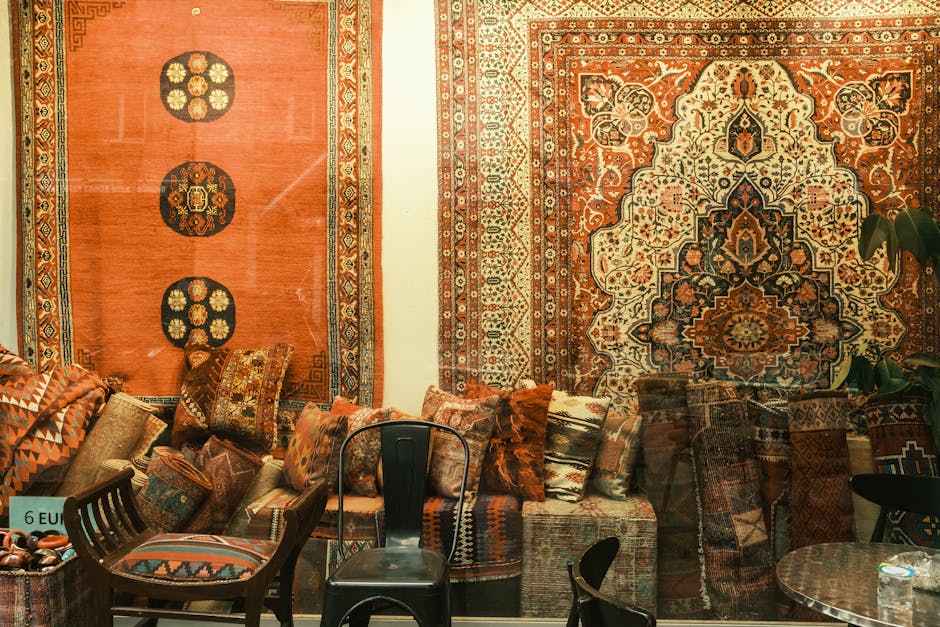
Top pick in luxury rug collection

Best Luxury Rug Collection


Persian rugs remain the gold standard for Luxury Rug Collection because they're hand-knotted with wool or silk, often taking months to complete a single piece. The intricate geometric and floral patterns you see aren't printed or woven by machine—each knot is tied individually, which is why a genuine Persian rug in your living room becomes an investment rather than just a floor covering. You'll typically pay between £200 and £600+ for an authentic piece, though smaller accent rugs start around £150.
What makes these rugs special is their durability and the way they age beautifully. A Persian rug in your home will look richer and more refined after 10 years than it did when new, as the pile settles and the colours deepen naturally. If you're buying from UK retailers like The Rug House, you'll find they stock both traditional designs and contemporary interpretations that work brilliantly in modern British homes.

Contemporary Luxury Sets
Rug sets—typically a large central rug paired with smaller coordinating pieces—solve a real problem for UK homeowners who want a cohesive look without mixing and matching. These collections often combine different textures and pile heights to create visual interest while maintaining a unified colour palette. A three-piece set might cost £280–£450, depending on materials and size, and saves you the guesswork of finding complementary rugs separately.
The advantage here is practical: you get a designer-curated combination that's been tested for how different materials and weaves work together. Many contemporary sets use a blend of wool, viscose, and silk to balance durability with that luxurious sheen you're after.
Turkish and Moroccan Styles
Turkish kilims and Moroccan rugs offer a different aesthetic—typically more geometric, with bolder colour blocking and a flatter weave that's easier to maintain. These are brilliant if you want something with character that won't show every footprint, and they're often more affordable than Persian equivalents at £100–£350 for quality pieces. A Turkish kilim works especially well in hallways or bedrooms where you don't need the plush underfoot feel of a deeper pile.

Moroccan rugs, with their natural wool construction and often asymmetrical patterns, bring warmth to minimalist spaces without competing with your furniture. They're also genuinely practical—spills don't penetrate as quickly as they do with high-pile rugs.
Modern Luxury Weaves
Brands like Safavieh have revolutionised the Luxury Rug Collection market by creating machine-made pieces that mimic hand-knotted quality at a fraction of the price. These rugs use viscose, wool blends, and sometimes silk-like synthetic fibres to create depth and movement that rivals handmade alternatives. You're looking at £80–£280 for a substantial rug that will genuinely last 10+ years with normal use.
The catch is honest: they won't age like a Persian rug, and they won't have the same prestige. But they will look stunning, feel luxurious underfoot, and won't require the specialist care that hand-knotted pieces demand. For most UK homes, this is where the sweet spot sits between luxury and practicality.
Current Deals — Luxury Rug Collection
Your choice between these types really comes down to three questions: How much foot traffic will the rug see? What's your budget for replacement or restoration in 15 years? And do you want something that becomes an heirloom or something that serves beautifully for a decade then moves on? The answer to those determines whether you're investing in a Persian piece, a contemporary set, or a modern luxury weave.